 1300 347 372

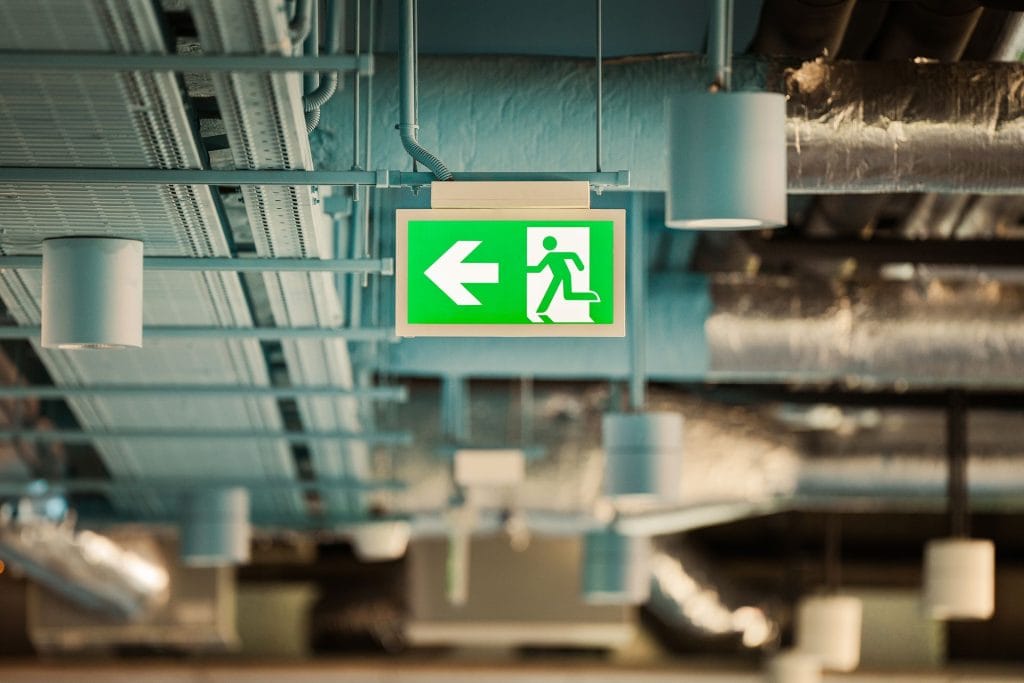
Miss your six-monthly service and your building falls out of compliance the day the interval lapses. Australian Standard AS/NZS 2293.2 requires emergency lighting and exit light testing every six months, and failed fittings are among the most common defects found during Sydney building inspections. When an inspector cannot confirm that your exit signs and emergency lights will operate in a blackout, that failure lands on your fire safety record, and if it is caught late, it can hold up your entire Annual Fire Safety Statement.
Emergency lighting and exit light testing in Sydney is a legal requirement under AS/NZS 2293.2, which mandates a service every six months alongside a more detailed annual inspection. Each test confirms that fittings illuminate, hold charge for the full 90-minute rated duration, and deliver the light levels needed for a safe exit. Emergency lighting is a listed essential fire safety measure, so any failure must be rectified before your AFSS can be signed. FireSafe AU carries out emergency lighting and exit light testing across Sydney and issues the compliant records your statement depends on.
What the law requires for emergency lighting and exit light testing in Sydney
Emergency lighting exists to guide occupants out of a building when mains power fails. The National Construction Code Part E4 sets where these systems must be installed, and Australian Standard AS/NZS 2293.2 (Emergency escape lighting and exit signs for buildings, inspection and maintenance) governs how they are tested and maintained once they are in. AS1851-2012, the standard for routine service of fire protection systems, sits alongside it as the broader framework for emergency lighting compliance in Sydney.
The standard sets two recurring obligations: a six-monthly routine service and a more thorough annual inspection. Both are mandatory, and both must be recorded. Use the table below as a quick reference, then read the detail underneath.
| Inspection type | Frequency | What is tested | Standard |
|---|---|---|---|
| Routine (six-monthly) service | Every 6 months | Discharge test for the full 90-minute rated duration, illumination and light-level check, visual inspection, test tag update | AS/NZS 2293.2 |
| Annual service | Every 12 months | Full discharge test plus detailed inspection, battery and lamp condition, cleaning, log book certification | AS/NZS 2293.2 |
| Service-life replacement | Around every 10 years | Replacement of fittings and batteries that have reached the end of their service life | AS/NZS 2293.2 and manufacturer guidance |
The six-monthly inspection
A six-monthly emergency lighting inspection in Sydney is the minimum interval the standard allows. It centres on a discharge test: the technician isolates mains power and confirms each fitting operates on its own battery for the full rated duration, which for emergency lighting is 90 minutes. Alongside the discharge test, the technician runs an exit sign illumination test to confirm the light output meets the required level, checks the fitting for damage, and updates the test tag. Any fitting that cannot hold charge for the full period fails on the spot.
The annual inspection
The emergency lighting annual inspection in NSW repeats the discharge test and adds a deeper level of scrutiny. The technician assesses battery and lamp condition, cleans the fittings, checks mounting and wiring, and certifies the result in the building’s log book. Think of the six-monthly service as confirming the system still works, and the annual service as confirming it will keep working for the year ahead.
What your records must show
Testing that is not documented does not count. Your emergency lighting log book must show the date of each service, the result for every fitting, any defect found, the rectification, and the technician’s certification. These records, together with current test tags on each unit, are what a certifier relies on at statement time. An accurate certification record is the difference between a smooth sign-off and a scramble.
Self-contained units versus central battery systems
Sydney buildings run one of two emergency lighting arrangements, and testing differs between them.
A self-contained emergency light unit has its own battery, charger, and lamp built into each fitting. Testing is carried out unit by unit, and a failure is isolated to that single fitting. Most small to mid-sized commercial and strata buildings use self-contained units.
A central battery emergency lighting system powers multiple fittings from one central battery bank. Testing covers the central supply as well as the individual fittings and the distribution between them, so it is a more involved process. A fault at the central battery can take out lighting across a whole floor or wing, which is why the routine on these systems is exacting. Whichever system your building runs, testing emergency exit lights in a commercial building must follow the AS/NZS 2293.2 routine.
The most common emergency lighting defects we find
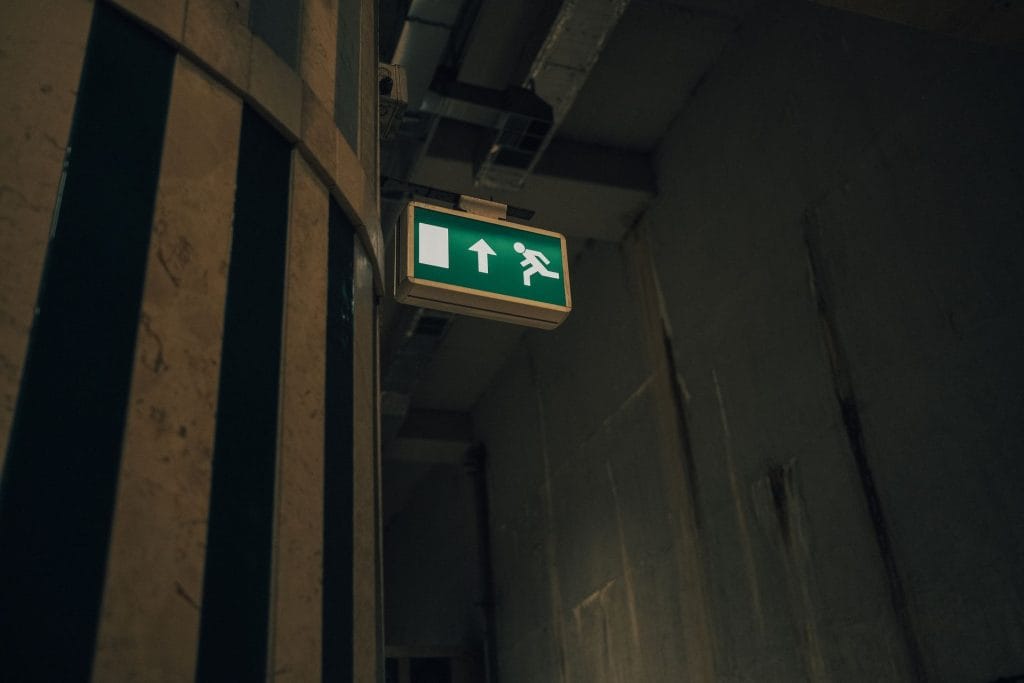
Most emergency exit light testing requirements are straightforward, yet the same faults turn up again and again during inspection. The defects we see most often are:
- Batteries that no longer hold charge for the full 90 minutes, so the fitting fails partway through the discharge test
- Faded, cracked, or poorly located photoluminescent exit signs that no longer meet the exit sign illumination test
- Fittings past their service life, which for many units is around ten years, still installed and unreliable
- Missing, expired, or incorrect test tags, leaving no evidence the fitting was ever serviced
- Exit signs obscured by signage, stock, or new fit-out work, so the path to the exit is not clearly marked
None of these are difficult to fix on their own. The risk is volume and timing: a building with dozens of aged fittings can accumulate enough failures that rectification becomes a project rather than a quick repair.
Emergency lighting and your AFSS
Emergency lighting is a listed essential fire safety measure, so emergency lighting AFSS compliance is not separate from your Annual Fire Safety Statement, it is part of it. A competent fire safety practitioner cannot certify the statement while an emergency lighting defect is outstanding. Every fitting must pass, or the defect must be rectified and retested, before the AFSS is signed.
This is where timing matters most. If a defect is found during the assessment window close to your lodgement date, the rectification and retest have to happen before you can lodge, and a large batch of failures can push you past your deadline. Booking your emergency lighting service in Sydney well ahead of your statement date leaves room to fix anything that fails. You can read how the statement fits together in our guide to the Annual Fire Safety Statement in NSW and the full AFSS process, or book a combined fire safety inspection that covers emergency lighting alongside your other measures. Our dedicated exit signs and emergency lighting service handles the testing itself, and we service related systems including smoke alarms and emergency warning systems (EWIS) in the same visit.
Emergency lighting and exit light testing FAQs
How often does emergency lighting need to be tested in NSW?
Emergency lighting must be serviced every six months under AS/NZS 2293.2, with a more detailed inspection once a year. The six-monthly interval is the maximum the standard allows, not a target, so a lapsed interval means your building is non-compliant. Both services must be recorded in the emergency lighting log book. Regular emergency lighting testing in Sydney on this schedule is what keeps your fire safety record clean.
What is the 90-minute discharge test?
The 90-minute discharge test isolates the mains supply and confirms each fitting runs on its own battery for the full rated duration of 90 minutes. This is the core of every emergency lighting battery test, because it proves the system will actually last long enough to evacuate a building during a blackout. A fitting that dims or fails before 90 minutes does not pass. It forms part of both the six-monthly and annual exit and emergency light testing routine.
How long does emergency lighting last before it needs replacing?
Many emergency lighting fittings have a service life of around ten years, though batteries often need replacing sooner. The discharge test is what tells you the real story: once a battery can no longer hold charge for the full 90 minutes, the unit needs repair or replacement regardless of its age. Keeping to a replacement schedule avoids a cluster of end-of-life failures arriving at once.
What happens if emergency lighting fails during an AFSS inspection?
A failed fitting is recorded as an emergency lighting defect and must be rectified before the Annual Fire Safety Statement can be signed. The fitting is repaired or replaced, retested, and the pass is documented. If failures are found late in your assessment window, the rectification can delay your lodgement, which is why emergency exit light testing is best scheduled well before your statement is due.
Do exit signs need to be tested separately?
Exit signs are tested as part of the same AS/NZS 2293.2 routine as your emergency lights, not on a separate schedule. Illuminated exit signs undergo the same discharge and illumination checks, while photoluminescent signs are assessed for visibility and condition. Booking exit sign testing in Sydney together with your emergency lighting keeps both on one compliant record.
Book your emergency lighting and exit light testing in Sydney
Do not let a lapsed interval or an undetected defect put your statement at risk. Book exit and emergency light testing in Sydney with FireSafe AU and we will run the full AS/NZS 2293.2 routine, rectify any failures, and issue the compliant records your AFSS requires. Call 1300 347 372 today.