 1300 347 372

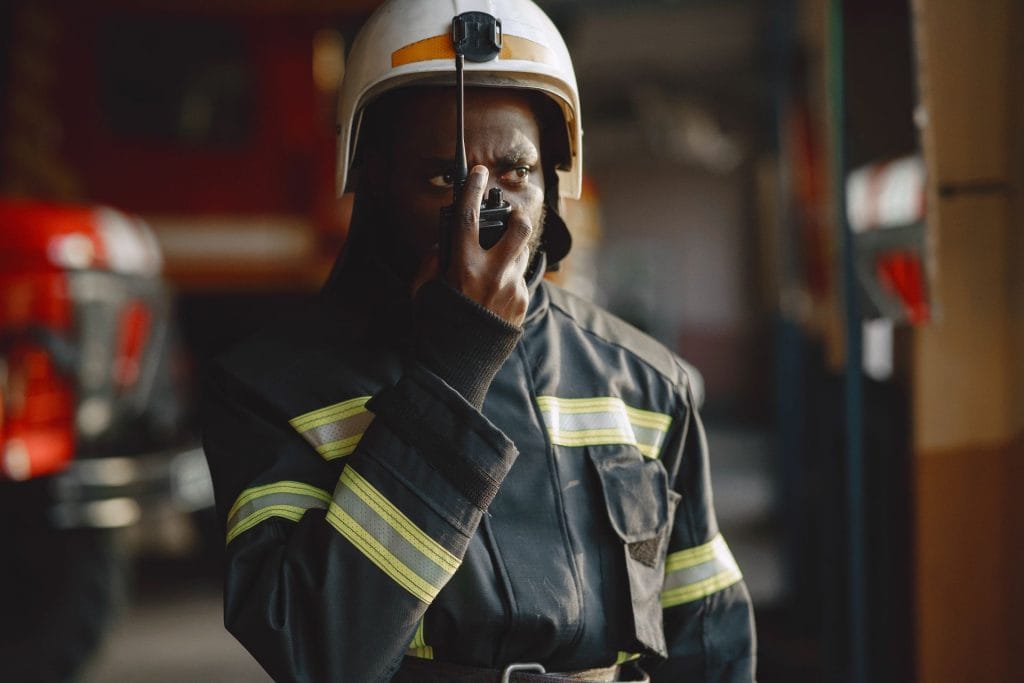
If a fire forces an evacuation and no one in your building is trained to run it, the law has already been broken before the first person reaches the street. Under the Work Health and Safety Regulation 2017 (NSW), every workplace must have an emergency plan, and in most commercial and strata buildings the only practical way to deliver that plan is a trained team of fire wardens. Understanding the fire warden requirements in NSW is not optional for a building owner or occupier, because the duty to prepare and implement an emergency plan sits with you, not with the fire brigade.
Fire warden requirements in NSW stem from the Work Health and Safety Regulation 2017, which requires every workplace to have an emergency plan, and from Australian Standard AS 3745-2010, which sets out how to deliver it through an Emergency Control Organisation of trained wardens. A fire warden in NSW is responsible for guiding a safe evacuation, and the standard recommends warden training at intervals no greater than six months. While warden training is not itself assessed in your Annual Fire Safety Statement, it depends on the emergency lighting, exit signs, and warning systems that are. FireSafe AU helps Sydney building owners keep every one of those measures compliant.
What the law requires: WHS Regulation 2017 and AS 3745-2010
Two documents sit behind every fire warden obligation in New South Wales, and it is worth being precise about which does what.
The Work Health and Safety Act 2011 (NSW) places a duty on a person conducting a business or undertaking to ensure health and safety so far as is reasonably practicable. The Work Health and Safety Regulation 2017 (NSW), at regulation 43, makes that concrete: the person must ensure an emergency plan is prepared for the workplace. That plan must provide for emergency procedures, including an effective response, evacuation of the premises, notifying emergency services, medical treatment and assistance, and communication between the person coordinating the response and everyone in the workplace. It must also cover testing of those procedures, and information, training, and instruction for workers.
That is the fire warden legal requirement for a commercial building in NSW, though the word “warden” does not appear in the regulation. The law mandates an emergency plan and trained people to carry it out. It does not, by name, tell you to appoint a chief fire warden.
The naming comes from Australian Standard AS 3745-2010 (Planning for emergencies in facilities), the recognised method for meeting the WHS emergency plan duty. It sets out how to form an Emergency Planning Committee to develop the plan and an Emergency Control Organisation (ECO) of wardens to execute it. A standard is not legislation, so following AS 3745-2010 is not itself compelled by law, but it is how building owners demonstrate they have met their WHS obligation. In practice, that means trained fire wardens.
The Emergency Control Organisation explained
AS 3745-2010 splits emergency management into two bodies. The Emergency Planning Committee (EPC) is responsible for developing, implementing, and maintaining the emergency plan and the ECO. The Emergency Control Organisation (ECO) is the team that acts during an emergency. The ECO is a structured chain of command, not a loose group of volunteers.
The fire warden responsibilities in NSW differ sharply by role, and the difference between a chief fire warden and a floor warden is the difference between running the whole response and running one floor of it. The table below sets out the contrast.
| Responsibility | Chief fire warden | Floor or area warden |
|---|---|---|
| Command | Takes overall control of the response, decides the course of action, and briefs emergency services on arrival | Directs the response on their assigned floor or area under the chief warden’s instruction |
| Communication | Coordinates the whole ECO and oversees the warning system with the communications officer | Reports floor status, all clear or assistance required, up to the chief warden |
| Evacuation | Initiates and manages the building-wide evacuation | Sweeps rooms, guides occupants to exits, and moves them to the assembly area |
| Accountability | Accounts for the entire building at the assembly area | Assists occupants who need help and accounts for their own floor |
| Identification | White cap or vest | Yellow cap or vest |
Larger sites add deputy chief wardens, a communications officer, and area wardens who coordinate several floor wardens. Smaller buildings may combine roles, but the chain of command stays the same.

Warden identification: cap and vest colours
AS 3745-2010 uses a colour convention so occupants and emergency services can identify each warden’s role at a glance during an evacuation. The Australian standard colours are:
- Chief warden and deputy chief warden: white cap or vest
- Communications officer: white
- Area and floor wardens: yellow
- Wardens: red
- First aid officers: green, though this varies by organisation
When you next see wardens in high-visibility caps during a drill, the colours are not decorative. They tell you at a glance who is in command and who to follow.
Fire warden requirements in strata buildings
Responsibility is a common point of confusion in strata. For a strata building, the duty to prepare an emergency plan generally falls to the owners corporation as the party responsible for common property, usually acting through its strata managing agent or building manager. That makes fire warden roles in a strata building an owners corporation responsibility for the common areas, stairwells, and shared exits, while individual businesses operating within the building carry their own WHS duties for their own tenancies.
The strata fire warden responsibility of the owners corporation does not disappear because a building is residential. Where workers attend common property, whether cleaners, contractors, or a building manager, WHS duties apply, and a mixed-use strata building with commercial tenancies almost always needs a functioning ECO. If your owners corporation has never formed an Emergency Planning Committee, that is the gap to close first.
Fire warden training requirements in NSW
Well-run fire warden training Sydney courses prepare wardens to act, not just to sit an exam. The fire warden training requirements in NSW that AS 3745-2010 supports typically cover the ECO structure and chain of command, your building’s emergency plan and evacuation routes, use of the warning system and firefighting equipment, human behaviour in emergencies, and the warden’s duties at the assembly area. A fire warden training course in Sydney should be tailored to your building, because a generic course that never references your own exits is of limited use.
On frequency, AS 3745-2010 recommends that ECO members complete skills-retention training at intervals no greater than six months, with initial training before a person takes on the role. So while there is no single line of legislation that says “fire warden training is mandatory in NSW“, the WHS Regulation requires trained workers to implement the emergency plan, and AS 3745-2010 sets six-monthly refreshers as the benchmark. Treating it as optional is the wrong reading of both.
The difference between fire warden and chief fire warden training in Sydney reflects the roles. Chief warden training adds command, decision-making, liaison with emergency services, and coordination of the whole ECO on top of the core warden skills. A chief warden needs both.
One practical point on cost. A fire warden allowance in NSW is an employment matter, not a fire-safety law. Some modern awards and enterprise agreements provide an allowance to employees who take on warden or first aid duties, so whether one applies depends on the relevant award or agreement rather than the WHS Regulation. Check the award that covers your staff.
How fire wardens connect to your AFSS
Warden training is not a line item on your Annual Fire Safety Statement. The AFSS assesses the physical essential fire safety measures in your building, not the people. That said, the two are inseparable in practice, because your wardens depend on the very systems the statement covers.
A warden cannot run an orderly evacuation without working emergency warning systems (EWIS) to raise the alarm and give instructions, exit signs and emergency lighting to guide occupants out in a blackout, and clear egress paths. All of those are assessed in your Annual Fire Safety Statement. A trained ECO and a compliant statement are two halves of the same obligation, which is why a regular fire safety inspection matters as much to your wardens as their training does. For managers of larger sites, our work across commercial and industrial properties keeps both sides aligned.
Fire drill requirements for commercial buildings in NSW
Training is proven in a drill. AS 3745-2010 recommends an emergency evacuation exercise at least once every twelve months, testing the full ECO and the building’s occupants. The fire warden training in NSW you invest in is only as good as the drill that tests it, because a drill exposes the gaps that a classroom cannot: an exit that is blocked, a warden who freezes, a warning message no one can hear. Annual drills combined with six-monthly warden refreshers keep an ECO genuinely ready rather than compliant on paper.
Fire warden requirements NSW FAQs
How many fire wardens are required in a workplace in NSW?
There is no fixed legal number. AS 3745-2010 requires the Emergency Planning Committee to size the ECO through a risk assessment covering the building’s size, layout, occupancy, and hazards. Many buildings appoint enough wardens to cover every floor and area with backups for absences, but the correct number is the one your risk assessment supports, not an arbitrary ratio.
Is fire warden training mandatory in NSW?
The Work Health and Safety Regulation 2017 requires every workplace to have an emergency plan and to train workers to implement it. AS 3745-2010, the standard used to meet that duty, recommends warden training at intervals no greater than six months. So while no single clause names “fire warden training” as mandatory, training people to run your emergency plan is a legal obligation, and wardens are how buildings meet it.
What is the difference between a chief fire warden and a floor warden?
A chief fire warden takes overall command, decides the response, and liaises with emergency services, while a floor or area warden runs the response on one floor under the chief warden’s direction. The chief warden wears white identification and accounts for the whole building; the floor warden wears yellow and accounts for their floor.
How often should fire wardens be trained?
AS 3745-2010 recommends skills-retention training at intervals no greater than six months, with initial training before a warden takes on the role. An emergency evacuation exercise should be held at least once every twelve months. Six-monthly refreshers plus an annual drill is the accepted benchmark for keeping an ECO ready.
Do strata buildings need fire wardens?
In most cases, yes. The owners corporation is generally responsible for the emergency plan for common property, and any mixed-use or commercial strata building where workers attend needs a functioning Emergency Control Organisation. Individual business tenants also carry their own WHS duties for their tenancies.
Is there a fire warden allowance in NSW?
A fire warden allowance is an employment matter, not a fire-safety law. Some modern awards and enterprise agreements provide an allowance to employees who take on warden or first aid duties, so whether one applies depends on the award or agreement covering your staff rather than on the WHS Regulation.
Talk to FireSafe AU about your building’s compliance
Trained wardens depend on compliant systems, and both are your responsibility as a building owner or manager. Contact FireSafe AU to review your building’s complete fire safety compliance, from emergency lighting and warning systems to your Annual Fire Safety Statement. Call 1300 347 372 today.