Receiving a Council fire safety order in NSW is not a warning. It is a formal legal notice that triggers a defined compliance obligation, a defined timeline, and specific consequences if that timeline is not met. Building owners who treat a fire safety order as the start of a negotiation, or who assume follow-up will not happen promptly, consistently find themselves facing penalty infringement notices, prosecution, or in serious cases a closure order.
The most important thing a building owner or manager can do when an order arrives is understand exactly what type of order it is, what action it requires, what evidence Council needs to close it, and how much time is available. The second most important thing is to engage a competent fire safety practitioner immediately, because the evidence Council requires is specific and technical, and general maintenance records rarely satisfy it alone.
In this guide, FireSafe AU explains the different types of Council fire safety orders in NSW, what triggers them, the response process, compliance timelines, and the evidence required to close an order. For a broader understanding of how ongoing fire safety maintenance prevents orders from being issued in the first place, see our fire safety inspections guide.
What is a Council fire safety order and what triggers one?
A fire safety order is issued by Council under the Environmental Planning and Assessment Act 1979 and the EP&A Regulation 2021. It is a formal direction to a building owner to take specified action to bring the building’s fire safety measures into compliance with the required standard.
Fire safety orders are triggered by:
Failed or overdue Annual Fire Safety Statement. A building that has not lodged its AFSS by the required date, or that has lodged a statement identifying defective measures that remain unrectified, is at risk of a Council fire safety order. Maintaining your essential fire safety measures to AS1851 and lodging the AFSS on time is the primary prevention.
Council inspection. Council officers conduct fire safety inspections under Section 9.34 of the EP&A Act. An inspection that identifies defective or absent essential fire safety measures can result in an order being issued at the time of inspection or shortly after.
Complaint. A complaint from an occupant, neighbour, or Fire and Rescue NSW about fire safety conditions in a building can trigger a Council inspection and a subsequent order.
Post-incident investigation. Following a fire or significant emergency event, Council may inspect the building and issue orders based on what the event revealed about the building’s fire safety condition.
What are the different types of fire safety orders?
Fire Safety Order under Section 9.34 EP&A Act. The standard order requiring the building owner to carry out specified work or take specified action to upgrade, repair, or install essential fire safety measures. The order specifies what must be done and by when.
Penalty Infringement Notice. Issued for specific offences including failure to lodge the Annual Fire Safety Statement. For corporations, PINs for fire safety offences carry significant financial penalties per notice. Paying a PIN does not satisfy the obligation to comply with any associated order: both run in parallel.
Urgent Fire Safety Order. For conditions that present an immediate risk to life, Council can issue an urgent order requiring action within a compressed timeframe, sometimes 24 to 48 hours. This arises when a critical system is found non-operational: a failed sprinkler system, a blocked means of egress, or a fire alarm panel that is offline.
Order to Vacate. In cases where a building presents an immediate danger that cannot be made safe quickly, Council can direct that the building be vacated until conditions are rectified.
What are the compliance timelines?
| Deficiency type | Typical timeframe |
|---|---|
| Minor: individual equipment failure, documentation gap | 30 to 60 days |
| Moderate: multiple equipment failures, systemic maintenance gaps | 60 to 90 days |
| Major: absent essential fire safety measure, system-wide failure | 3 to 6 months |
| Urgent: immediate life safety risk | 24 hours to 14 days |
These are starting points. If additional time is genuinely required, engage Council proactively with a detailed rectification programme and documented interim risk management measures. Council responds better to demonstrated good faith than to silence followed by a missed deadline.
What evidence does Council require to close a fire safety order?
Council does not close a fire safety order on the building owner’s assurance that the work has been done. Specific technical evidence from properly qualified persons is required:
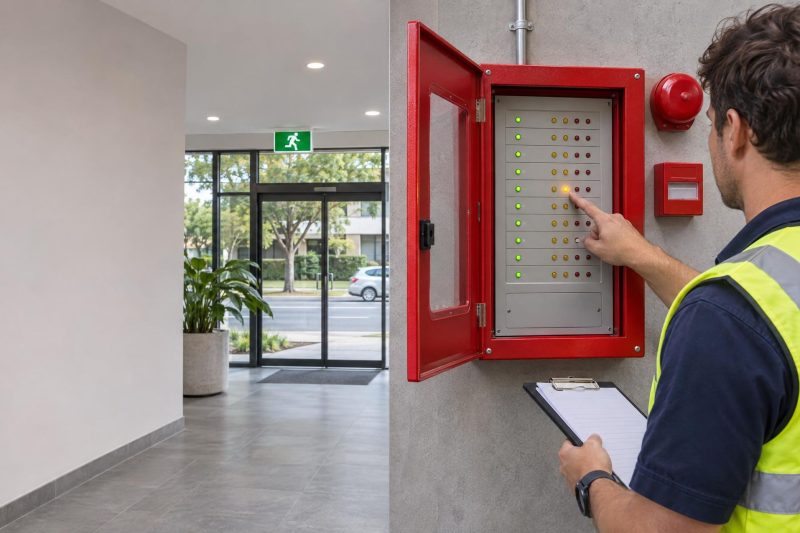
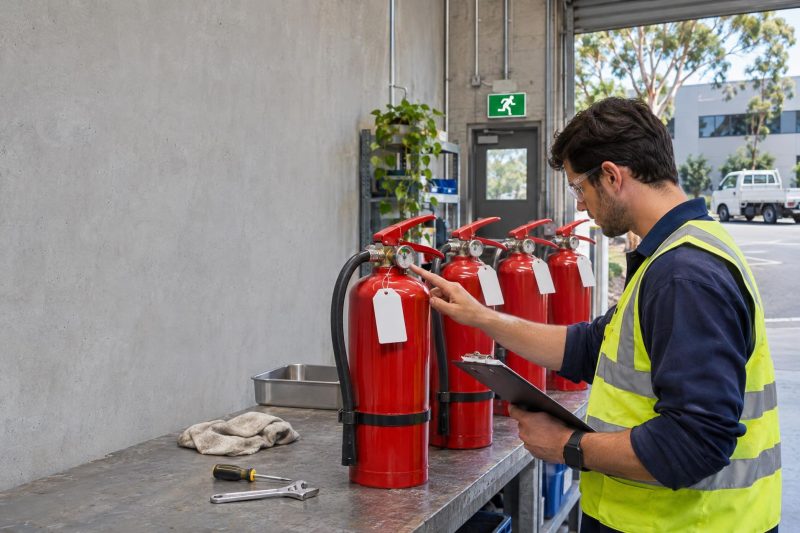
Written inspection report from a competent fire safety practitioner. The report must assess each measure identified in the order, confirm rectification to the required standard, name the practitioner, and be signed. This report is the centrepiece of the evidence package.
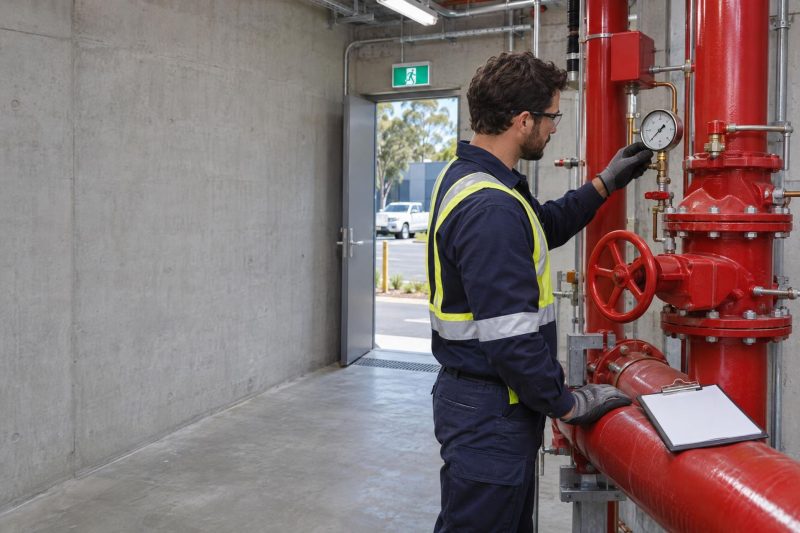
Completion certificates from licensed contractors. For specific system types including sprinklers, fire alarm systems, and EWIS, completion certificates from the licensed contractors who carried out the rectification work are required alongside the practitioner’s report.
Before and after photographs. Photographs of each rectified item with sufficient detail to identify the location, the nature of the defect, and the completed rectification. Generic building photographs do not satisfy this requirement.
Updated maintenance records. Evidence that rectified measures have been entered into the building’s maintenance programme and that an initial post-rectification service has been completed.
Current Annual Fire Safety Statement. In many cases Council requires a current AFSS, or a partial AFSS covering the rectified measures, as the culminating piece of evidence that the building’s fire safety is now in order.
What happens if a fire safety order is not complied with?
Non-compliance escalates through defined stages:
- Additional Penalty Infringement Notices issued for each period of continued non-compliance
- Prosecution in the Land and Environment Court, where penalties for corporations can reach $1,100,000 for relevant offences
- Council-arranged rectification carried out by Council’s appointed contractors at the building owner’s expense, with costs recovered as a charge on the land
- Order to Vacate requiring all occupants to leave until compliance is achieved
The cost of compliance is consistently lower than the cost of non-compliance at any stage of this escalation. Contact FireSafe AU immediately if you have received a fire safety order: the sooner rectification begins, the more timeline options you have.
Book Your Council Fire Safety Order Response Assessment With FireSafe AU
If you have received a Council fire safety order, FireSafe AU can carry out an immediate assessment of the identified deficiencies, develop a rectification programme with a realistic timeline, perform the rectification works, and prepare the full evidence package Council requires to close the order.
We have extensive experience responding to fire safety orders across Sydney commercial, strata, and industrial buildings and can engage directly with Council on your behalf where appropriate. View our full range of fire protection services or contact FireSafe AU today to arrange an immediate assessment.
Frequently Asked Questions: Council Fire Safety Orders NSW
How long do I have to comply with a Council fire safety order?
The timeframe is specified in the order. Typical timeframes range from 24 hours for urgent orders to 30 to 90 days for standard orders to up to six months for major rectification programmes. If additional time is needed, engage Council proactively rather than missing the deadline without communication.
Can I appeal a Council fire safety order?
Fire safety orders under the EP&A Act can be appealed to the Land and Environment Court. An appeal does not automatically stay the compliance obligation. Legal advice should be obtained immediately if you intend to appeal.
What is the difference between a fire safety order and a Penalty Infringement Notice?
A fire safety order requires you to take specific action. A PIN imposes a financial penalty for a specific offence. Both can be issued for the same event and both run independently. Paying the PIN does not satisfy the order.
Who pays for rectification work required by a fire safety order?
The building owner. In strata buildings, common property rectification is funded by the owners corporation. The primary compliance obligation is the building owner’s regardless of lease terms.
Do I need a lawyer to respond to a fire safety order?
For straightforward orders involving identified equipment deficiencies, a competent fire safety practitioner is the primary professional required. For contested orders or orders involving potential prosecution, legal advice is warranted.

Written by FireSafe AU. Australian family owned since 2010 and a Silver Member of the Fire Protection Association of Australia. Testing, inspection and maintenance to AS1851-2012 across Sydney.