A fire risk assessment is one of the most misunderstood documents in commercial building fire safety. Building managers regularly confuse it with a fire safety inspection, an Annual Fire Safety Statement, or a fire safety certificate. It is none of those things. A fire risk assessment is a qualitative or quantitative analysis of the fire hazards specific to a building’s use and occupancy, conducted to identify risks, evaluate their likelihood and consequences, and produce a documented remediation plan.
In NSW, certain circumstances make a fire risk assessment a legal requirement. In others it is not mandatory but is increasingly expected by insurers, certifiers, and regulators. Understanding when your building needs one, what it covers, and who can conduct it is the starting point for a complete fire safety programme.
In this guide, FireSafe AU explains what a commercial building fire risk assessment is, how it differs from other fire safety documents, when NSW buildings are required to have one, and what the assessment process involves. For context on your ongoing inspection and maintenance obligations, see our fire safety inspections guide.
What is a fire risk assessment and how is it different from a fire safety inspection?
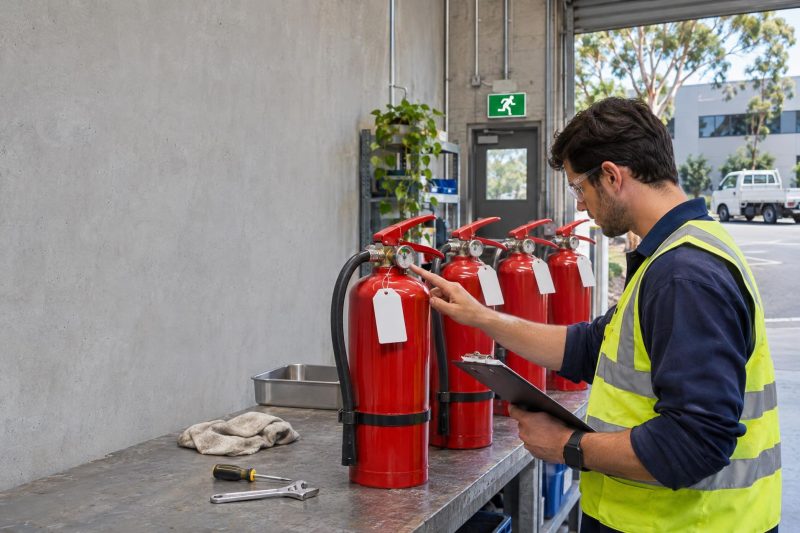
A fire safety inspection under AS1851 checks that installed fire protection systems are operational and maintained to the required standard. It answers the question: are the systems working? A fire risk assessment asks a different and broader question: what are the fire hazards in this building, how likely are they to cause harm, and are the existing systems and controls adequate to manage those hazards?
The distinction matters in practice:
| Document | Question it answers | Conducted by | Frequency |
|---|---|---|---|
| Fire safety inspection (AS1851) | Are installed systems operational? | Competent fire safety practitioner | Per AS1851 schedule |
| Annual Fire Safety Statement | Have measures been maintained to the required standard? | Building owner with practitioner support | Annually |
| Fire Safety Certificate | Do installed measures meet the required standard at installation? | Properly qualified person | Once, at installation |
| Fire risk assessment | What are the hazards and are existing controls adequate? | Fire engineer or accredited risk assessor | As required or triggered |
A building can have fully maintained fire protection systems, a current AFSS, and a Fire Safety Certificate and still have fire risks that a technical assessment would identify as inadequately managed for the building’s current use.
When is a fire risk assessment required in NSW?
A fire risk assessment is not universally required for all commercial buildings on a routine basis. It is required or strongly expected in specific circumstances:
WHS Regulation 2017: The Work Health and Safety Regulation requires persons conducting a business or undertaking to identify hazards and manage risks to health and safety. For workplaces with significant fire hazards, including chemical storage, manufacturing processes, or high-occupancy venues, a documented fire risk assessment is the expected evidence of systematic hazard management.
Performance-based fire engineering: Buildings that use a performance-based fire engineering solution under the NCC require a fire engineering report that incorporates a fire risk assessment as part of the alternative solution documentation.
Change of use or fit-out: When a building changes use in a way that substantially alters its fire risk profile, a fire risk assessment determines whether the existing fire safety measures remain adequate for the new use. The existing sprinkler system, detection layout, and emergency lighting that served the original use may not be adequate for the new one without modification.
Heritage buildings: Heritage buildings that cannot be fully upgraded to current NCC standards often require a fire risk assessment as part of the alternative solution framework justifying the compensating measures provided.
Insurer requirement: Commercial property insurers increasingly require a current fire risk assessment for certain building types and occupancies as a condition of cover or as part of the underwriting process.
Post-incident review: Following a fire, near-miss, or significant operational change, a fire risk assessment is typically required to demonstrate that lessons have been identified and that controls have been updated.
What does a commercial fire risk assessment cover?
A comprehensive fire risk assessment for a commercial building addresses:
Hazard identification: Every potential ignition source, fuel source, and condition that could allow a fire to start or spread. This includes fixed hazards (electrical installations, storage of flammable materials, cooking equipment) and variable hazards (contractor activities, temporary storage, seasonal changes in occupancy).
Occupant risk profile: Who is in the building, how many, what their mobility and cognitive capacity is, and how quickly they can evacuate. A building occupied primarily by mobile, alert adults has a different risk profile from a building with non-ambulant residents or large numbers of members of the public unfamiliar with the layout.
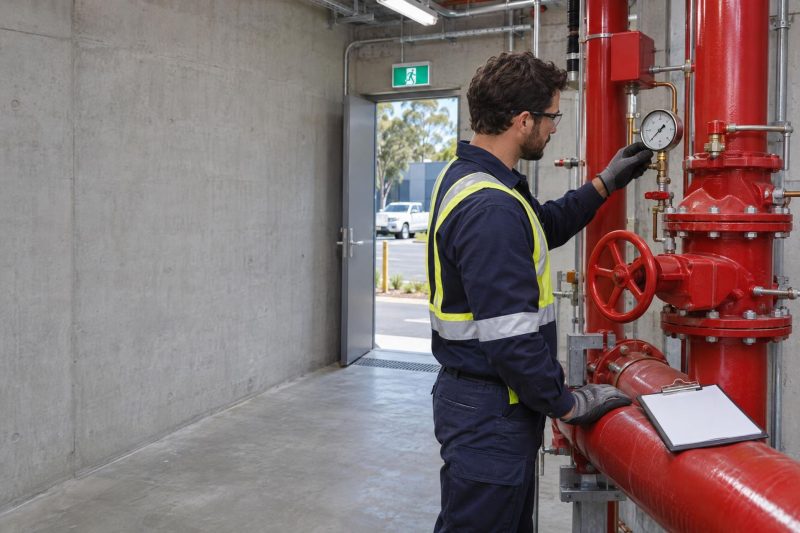
Assessment of existing controls: Whether the installed fire protection systems, the passive fire protection elements, the evacuation procedures, and the warden arrangements are adequate to manage the identified risks. This is where the gap between “systems are maintained” and “systems are adequate” becomes visible.
Risk evaluation: Each identified hazard is assessed for likelihood of occurrence and severity of consequence. High-likelihood, high-consequence combinations are prioritised for remediation action.
Remediation recommendations: A documented list of actions to reduce identified risks, with priority ratings and recommended timeframes. An assessment without this component is incomplete.
Review programme: A statement of when the assessment should next be reviewed, based on the building’s risk profile and any anticipated changes to its use or occupancy.
Who can conduct a fire risk assessment in NSW?
The WHS Regulation and the NCC do not prescribe a single qualification category for all fire risk assessments. The appropriate assessor depends on the complexity of the building and the purpose of the assessment:
Fire engineers: Registered professional engineers with fire engineering specialisation are appropriate for complex buildings, performance-based fire engineering solutions, and assessments that inform regulatory decisions.
Accredited fire risk assessors: Practitioners accredited through industry bodies including the Fire Protection Association Australia hold recognised competencies for fire risk assessment in commercial buildings.
Competent fire safety practitioners: For assessments conducted in the context of the AFSS regime under the EP&A Regulation, the practitioner must be a competent fire safety practitioner as defined in the Regulation.
The key principle in all cases is that the assessor must have the technical knowledge to identify the hazards relevant to the specific building type and occupancy. A general building inspector is not the appropriate assessor for a chemical storage facility.
What does the fire risk assessment process look like?
- Pre-assessment document review. The assessor reviews the building’s fire safety schedule, current and previous AFSS records, maintenance records, floor plans, and any prior assessment reports. This establishes the baseline before the site visit.
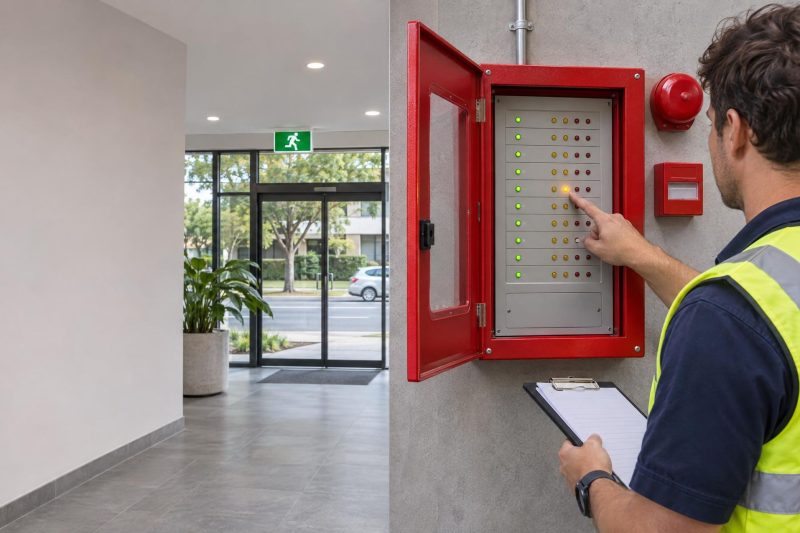
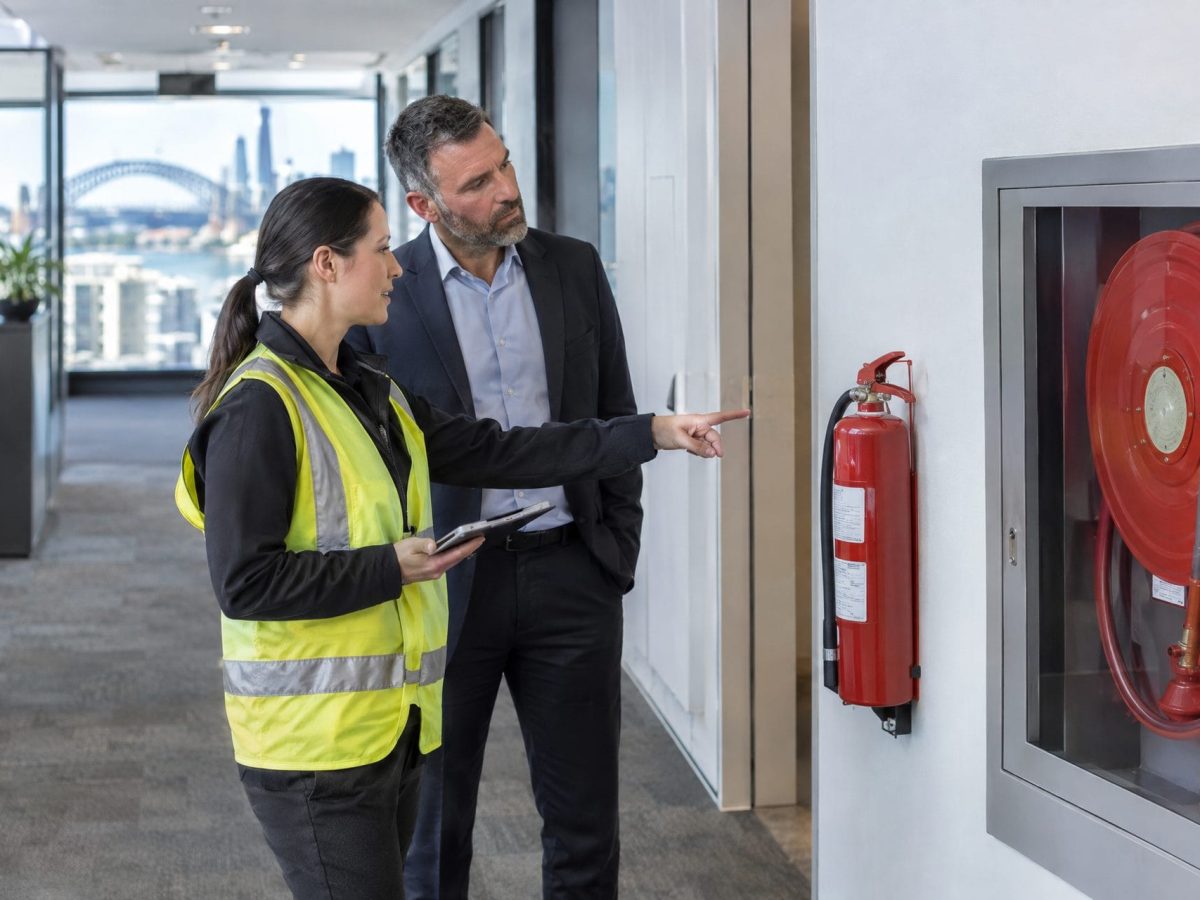
- Site inspection. A systematic walkthrough identifying ignition sources, fuel loads, compartmentation condition, detection coverage, suppression system adequacy, means of egress, and conditions not apparent from documentation.
- Hazard and risk analysis. Each identified hazard is evaluated for likelihood and consequence. The assessor determines whether existing controls are adequate, inadequate, or absent for each hazard.
- Written report. The assessment report documents every identified hazard, the risk rating, the existing controls, the gap between existing and adequate controls, and the recommended remediation actions with priorities and timeframes.
- Remediation programme. For buildings with identified gaps, a programme is developed and implemented. The assessment is not closed until remediation is complete or formally accepted as a managed residual risk.
FireSafe AU provides fire risk assessment services for commercial buildings across Sydney. Contact our team to discuss your building’s requirements.
Book a Commercial Fire Risk Assessment With FireSafe AU
FireSafe AU carries out fire risk assessments for commercial, industrial, strata, and institutional buildings across Sydney. Our assessments are structured to meet WHS Regulation requirements, support performance-based fire engineering documentation, and satisfy insurer requirements. Every assessment produces a written report with identified hazards, risk ratings, and a prioritised remediation plan.
View our full range of fire protection services or contact FireSafe AU today to arrange your fire risk assessment.
Frequently Asked Questions: Fire Risk Assessments for Commercial Buildings NSW
Is a fire risk assessment the same as a fire safety inspection?
No. A fire safety inspection checks that installed systems are operational and maintained. A fire risk assessment evaluates the fire hazards in a building, assesses whether existing controls are adequate to manage them, and produces a remediation plan. The two serve different purposes and are conducted by different practitioners.
How often should a commercial fire risk assessment be reviewed?
Most assessors recommend review every three to five years for stable, low-risk buildings, and annually or following any significant change for higher-risk buildings. Changes that trigger an unscheduled review include change of use, major fit-out works, changes in occupancy type or numbers, and any incident or near-miss.
Does my building need a fire risk assessment if it has a current AFSS?
A current AFSS confirms that installed fire protection measures have been maintained. It does not assess whether those measures are adequate for the building’s current use and occupancy. A fire risk assessment answers that broader question and the AFSS does not substitute for it where one is required.
Can a fire risk assessment reduce my building insurance premium?
Some insurers reduce premiums or offer more favourable underwriting terms for buildings with a current, independently conducted fire risk assessment demonstrating systematic hazard management. The specific impact depends on the insurer and the building’s risk profile.
What qualifications should a fire risk assessor hold?
Qualifications vary by assessment complexity. Fire engineers are appropriate for complex buildings and performance-based solutions. Practitioners accredited through the Fire Protection Association Australia are appropriate for most commercial building assessments. The assessor must have specific competency in fire risk assessment methodology, not just general building inspection experience.

Written by FireSafe AU. Australian family owned since 2010 and a Silver Member of the Fire Protection Association of Australia. Testing, inspection and maintenance to AS1851-2012 across Sydney.