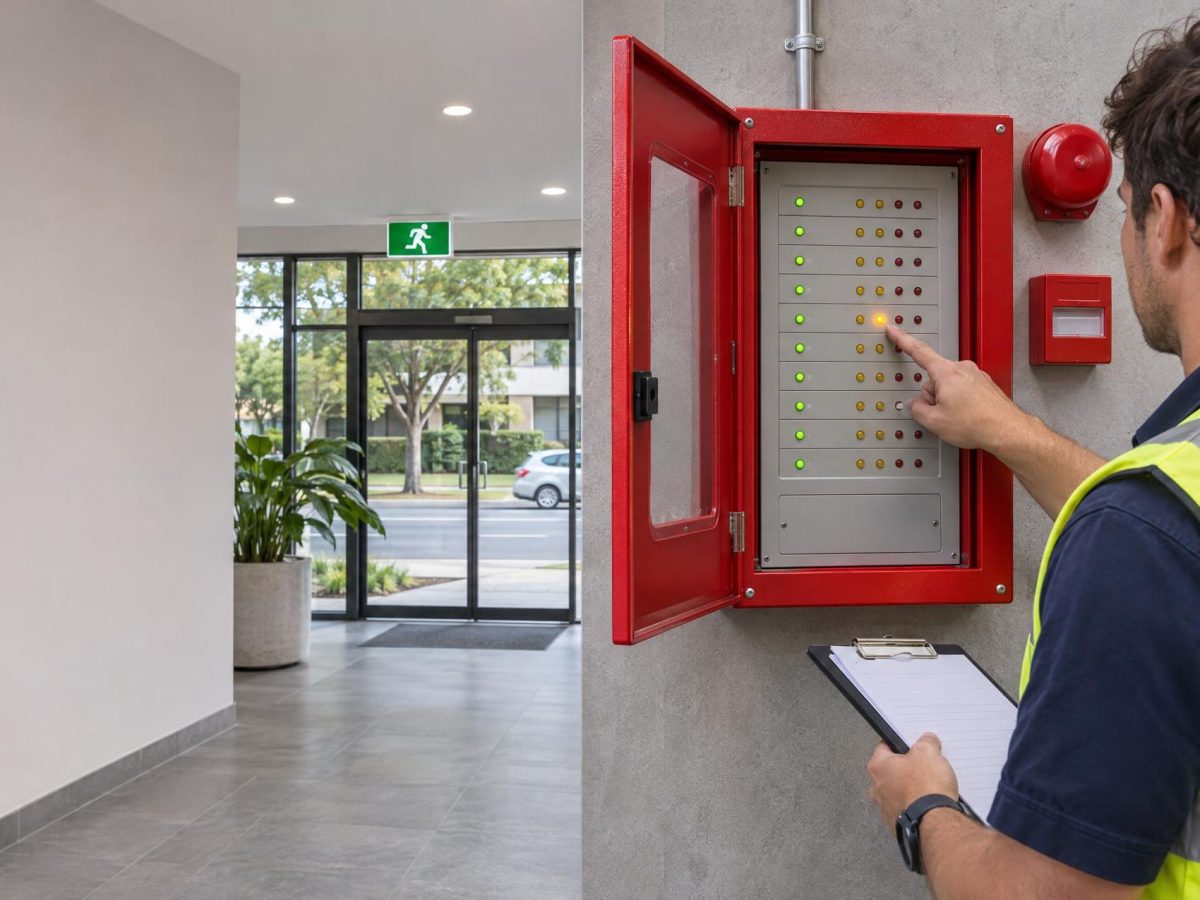
Three names, one object. Fire indicator panel, fire panel, fire alarm panel. Owners use all three, contractors use all three, and they all refer to the box in the front lobby that tells you what the building’s detection system is doing.
It is also the piece of equipment most often misunderstood, because a panel that looks calm is not the same thing as a panel that is healthy.
What is a fire indicator panel?
It is the control and indicating equipment for a building’s detection and alarm system. Every smoke detector, heat detector and manual call point reports back to it, and it displays the state of each zone.
The panel does three things. It monitors the detection circuits continuously. It sounds the alarm and, where fitted, signals the fire brigade. And it records what happened, so the event history can be read afterwards.
In a commercial or high-rise building it is usually at the main entrance so attending firefighters can read it immediately. That placement is deliberate. The panel is the handover point between the building and the brigade.
What does the display actually tell you?
Four states, and the difference between them matters more than the labels suggest.
Alarm. A detector or call point has activated. The panel identifies the zone, which narrows where to look. On a multi-level building the zone list inside the door is what converts a number into a floor.
Fault. Something has failed or been disconnected. A fault is not an alarm and it is not nothing. A detector that has faulted is a detector that will not report a fire, and the panel showing a fault is telling you it has a blind spot.
Isolate or disable. Someone has deliberately removed a zone or device from service. This is the state that needs attention, and it is where most serious panel problems begin.
Normal. All circuits healthy, nothing isolated, no faults. The only state that means what people assume it means.
Why is an isolated zone dangerous?
Because an isolated zone will not do the one thing it exists to do.
Isolation is sometimes legitimate. Welding in a plant room, dust from a renovation, a faulty detector awaiting a part. In each case the panel is doing what it was asked, which is to stop nuisance alarms from a known condition.
The problem is what happens next. Work finishes, the isolation is not lifted, and the building carries a dead zone for weeks. Nobody notices, because the panel is quiet and quiet reads as fine. Then a fire starts in that zone and nothing reports it.
The professional answer is a permit-to-isolate process with a log. Every isolation recorded with who applied it, why, and when it is due back in service, reviewed at every visit. A long-standing isolate with no record of why is a finding worth escalating on the spot.
What testing does a fire indicator panel need?
Two levels, and both matter.
The frequent check. Indicators, lamps and the display are examined and the panel observed for any indicated fault. Where the system has a signalling path to the brigade or a monitoring centre, that path is checked as part of the routine.
The periodic test. Detectors and call points are tested across the system so every zone is exercised, alarm and warning functions are verified, and the event log is confirmed as recording. Battery and power supply condition is checked at the same time.
Full frequencies sit in the standard, and the table is on our equipment testing frequencies page. Panel servicing sits inside the wider programme under fire equipment maintenance and inspection, and the standard is explained in AS1851-2012 explained.
What are the most common panel faults?
Five, in rough order of frequency.
Isolates left in place. The most common and the most serious.
Detector contamination. Dust and insect ingress make a detector over-sensitive, causing nuisance alarms, or under-sensitive, which is worse.
Power supply and battery failure. A panel on a failed battery behaves normally until mains power is lost, at which point the system goes dark.
Circuit faults from building works. A cable damaged during a fit-out, a device removed and not reconnected, a zone left open. Frequently left standing because nobody is watching the panel.
Signalling path failure. The panel is healthy but the connection to the monitoring centre has failed. The alarm sounds locally and goes nowhere else.
How does a panel differ from an occupant warning system?
They are separate functions and frequently confused.
The panel monitors detection and controls the response. The occupant warning system produces the sound and, where fitted, the voice message telling people to leave. In many buildings they are integrated, but they are not the same thing, and a healthy panel does not guarantee a working warning system.
That distinction matters at assessment, because they can appear as separate measures on the schedule. The occupant side is covered under EWIS and building occupant warning systems, and smoke control under stairwell pressurisation systems.
When should a panel be replaced rather than repaired?
Three signals. The panel is obsolete and spares are unavailable, so a failure cannot be corrected in reasonable time. The building has grown around it through extensions and added zones until the panel no longer reflects the building it protects. Or the technology has moved and the panel cannot support what compliance now expects, particularly around monitoring and event records.
Repair remains right in most cases. Replacement is a capital decision that should follow an assessment rather than a service visit. The difference between an audit, an inspection and a statement is in fire safety audit, inspection and statement.
What should a building keep on file?
Four things. The zone chart, so a panel reading becomes a location. The event log, retained for the current cycle. The isolation register, showing every isolate and its removal. And the itemised service records for the panel.
All of these come up when a council order is issued or an insurer asks questions. A building that can produce them answers an enquiry in an afternoon rather than a fortnight.
Frequently asked questions
What does FIP stand for?
Fire indicator panel. Also called a fire panel or fire alarm panel. All three refer to the same control and indicating equipment.
What does it mean when a fire panel shows a fault?
Part of the system has failed or been disconnected and will not report a fire. It is not an alarm, but it is not harmless. A fault is the panel telling you it has a blind spot.
Is it safe to leave a zone isolated?
Only with a documented reason and a defined end point. While the isolation stands, the building has no detection in that area. An isolate with no record of who applied it, why, or when it comes out is a genuine risk.
Where should a fire indicator panel be located?
At the main entrance or another position agreed with the fire brigade, so attending firefighters can read it immediately. The zone chart belongs at the panel, not in an office.
How often is a fire indicator panel tested?
Indicators and any faults are checked at every routine attendance, with fuller system testing on the periodic cycle. The specific interval comes from the standard and the building’s own Fire Safety Schedule.
What is the difference between a fire panel and an EWIS?
The panel monitors detection and controls the response. The occupant warning system produces the alarm sound or voice message telling people to evacuate. They work together but are separate functions.
Why does a panel show a fault after building works?
Because cabling or devices were disturbed and not restored. A fit-out that moves a detector or reroutes a circuit can leave a zone open, and the panel reports it as a fault.
Does a healthy panel mean the building is compliant?
No. A panel can function correctly while other scheduled measures, such as fire doors or emergency lighting, are failing. The panel tells you about detection, not the whole building.

Written by FireSafe AU. Australian family owned since 2010 and a Silver Member of the Fire Protection Association of Australia. Testing, inspection and maintenance to AS1851-2012 across Sydney.