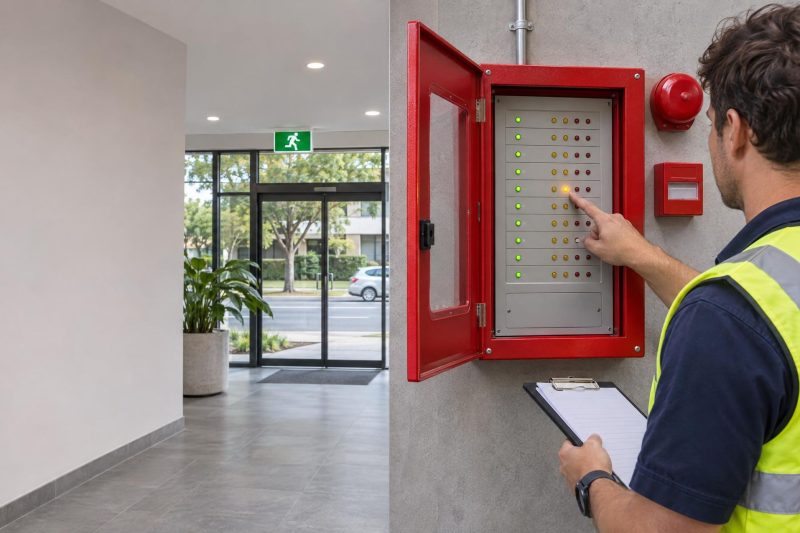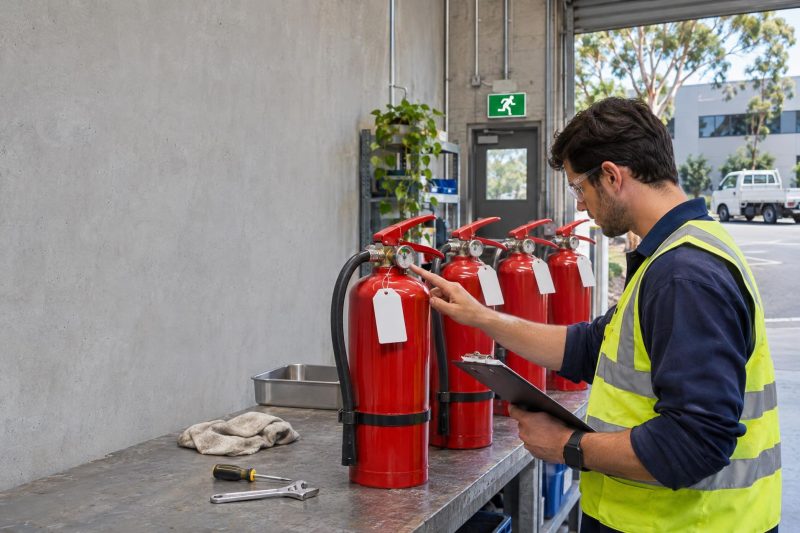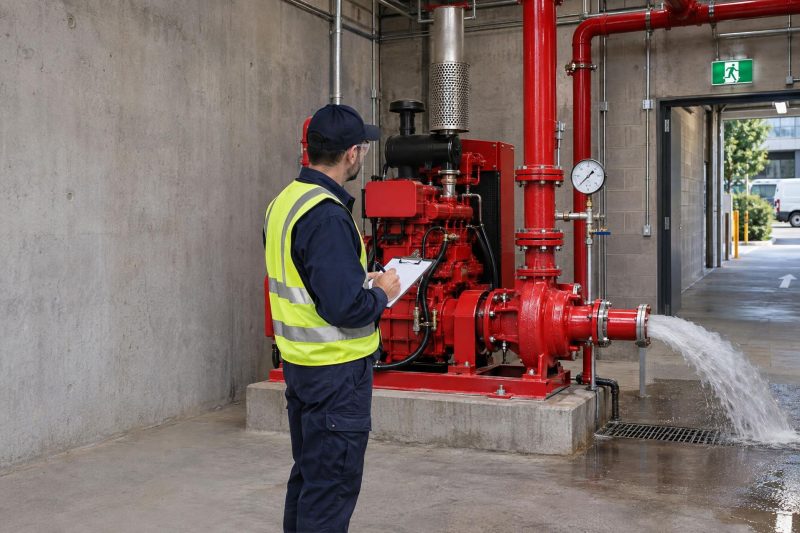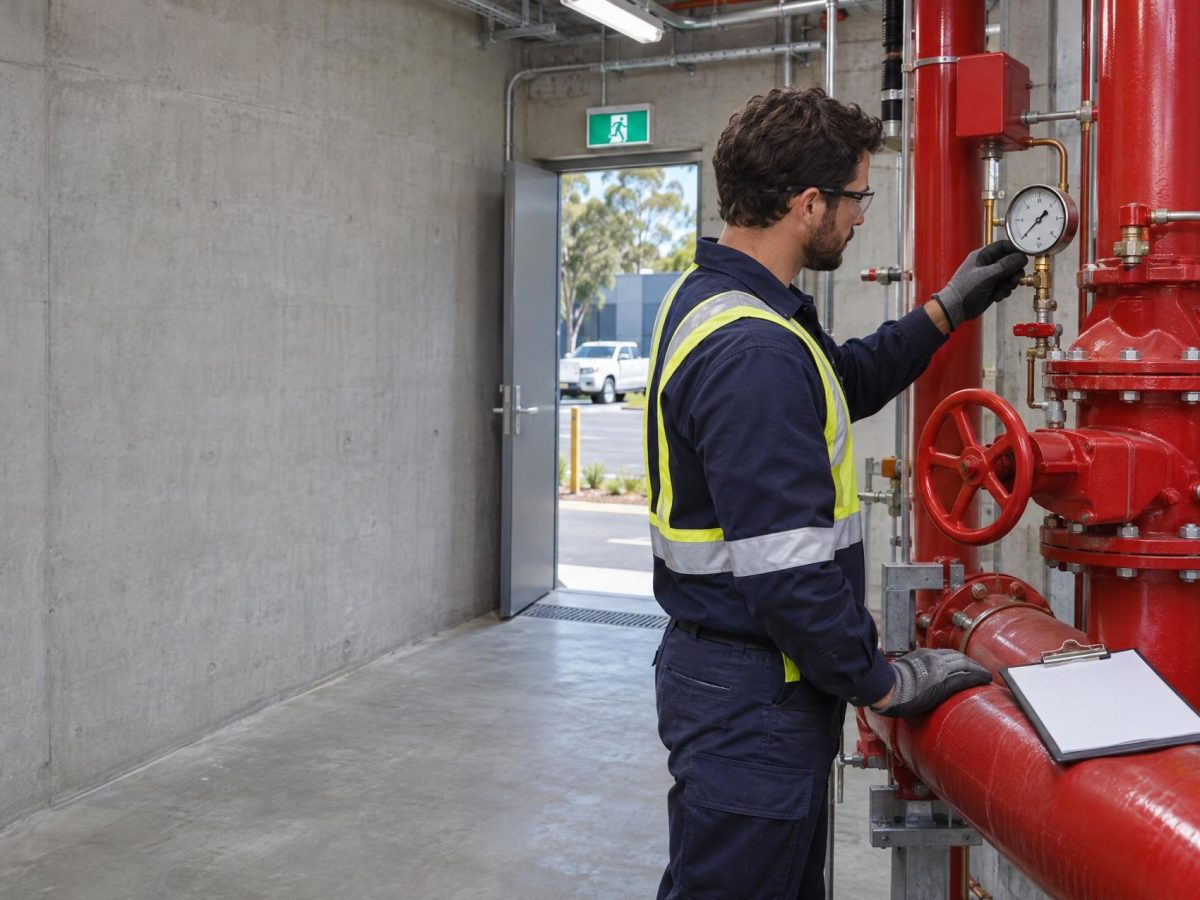
If a building has a Fire Safety Schedule, AS1851-2012 decides how often each item on it has to be tested. It is the standard FireSafe’s service model is built around, and it is the one most owners have never read.
That matters, because the standard is what a contractor is measured against. An owner who does not know the frequency for an extinguisher cannot tell whether a quote is thorough or thin.
What is AS1851-2012?
It is the Australian Standard covering routine service of fire protection systems and equipment. For each type of system it sets out what is inspected, what is tested, and the interval between those activities.
It is a servicing standard, not a design standard. It assumes the system was installed correctly and asks whether it still works.
What does it cover, and what falls outside it?
Inside: portable fire extinguishers, fire hose reels, hydrants and pump sets, sprinkler systems, fire detection and alarm, occupant warning systems, emergency lighting and exit signage, fire doors, fire and smoke dampers, and smoke control features.
Outside: design and installation, which sit under separate standards, and the statutory side, which is the Fire Safety Schedule, the annual statement and council lodgement.
The distinction matters. A building can be designed and installed correctly and still be non-compliant because nothing was tested on the right cycle. The reverse is also true: a well-serviced building can fail its statement because a measure on the schedule was never installed.
How often does fire equipment need servicing?
Frequencies vary by measure and sit in bands rather than one annual cycle. The compliance calendar is therefore rolling, with something due most months.
| Measure | Cycle |
|---|---|
| Portable fire extinguishers | Six-monthly service |
| Fire hose reels | Six-monthly |
| Emergency lighting and exit signs | Monthly short test, six-monthly duration test |
| Fire doors | Annual inspection |
| Fire pumps | Weekly and monthly checks |
| Sprinkler systems | Weekly or monthly gauge checks, plus annual full test |
Two things follow. A contractor offering one visit a year is not offering a compliant service on extinguishers, hose reels or emergency lighting. And the calendar has to be built measure by measure, which is what the equipment testing frequencies table is for.
What records does the standard require?
Every service produces a record showing what was tested, the result, and who carried it out. Those records are what an auditor, insurer or council asks for when something is questioned.
A log saying “fire equipment serviced, all good” is not a record. A log naming each measure, the test applied and the outcome is.
This is why every FireSafe attendance produces a written report with findings, photographs and the required action, issued once the technician leaves site. The fire equipment maintenance and inspection page sets out how that works.
How does it relate to the schedule and the annual statement?
Three documents, three jobs, and confusing them is common.
The Fire Safety Schedule is attached to the development consent. It lists the essential fire safety measures the building must have and the standard each must meet. More on that in Fire Safety Schedule explained.
AS1851-2012 decides how often each of those measures is serviced.
The annual fire safety statement is the yearly declaration that each measure has been assessed and still performs, lodged with council. The statement process is in the AFSS guide for NSW.
Put plainly: the schedule says what the building must have, the standard says how often it is checked, and the statement says whether it still works.
What happens when a measure fails?
It is rectified or disclosed. There is no third option, and timing decides which.
A failure found on a routine visit with weeks before the statement is due is a maintenance job. The same failure found the week the statement is prepared becomes a written compliance problem that has to appear rather than be quietly fixed. That argument is in why fire safety inspections are non-negotiable.
Can everything be done in one annual visit?
No, and a contractor who says otherwise is working to their own convenience. The programme has to be built around the shortest cycle in the building, not the longest.
For a typical commercial building that means extinguishers and hose reels twice a year, emergency lighting tested monthly with a duration test twice a year, fire doors and broader systems annually, and longer cycles on some pump and sprinkler tests.
What should an owner ask a contractor?
Four questions, and the answers are revealing.
Which clause does this test come from? A vague answer suggests general experience rather than a defined procedure.
Where is the written record, and does it name each measure? A combined sign-off across unrelated equipment tells you nothing.
What is the frequency for each item on my schedule, and what is it based on? It should reference the standard, not the contract.
What happens when something fails? It should involve a written finding and a rectification path.
Frequently asked questions
What is AS1851-2012 in plain terms?
The Australian Standard setting out how fire protection systems and equipment are routinely serviced, including what is inspected, what is tested and how often.
Is AS1851 a legal requirement?
The standard is not legislation, but it is the benchmark a building’s obligations are measured against. A Fire Safety Schedule requires each measure to be maintained to a standard, and
AS1851 defines that maintenance.
How often should fire extinguishers be serviced?
Six-monthly. That is shorter than the annual statement, which is why servicing and statement preparation are separate activities.
What is the difference between AS1851 and the annual fire safety statement?
AS1851 governs servicing across the year. The statement is a single yearly declaration, lodged with council, that each scheduled measure performs.
What is a Fire Safety Schedule?
The document attached to a building’s development consent listing the essential fire safety measures it must maintain and the standard each must meet.
Do all measures run on the same cycle?
No. Intervals run from monthly to five-yearly depending on the measure, which makes the programme rolling rather than annual.
What records should a building hold?
A record for every service, naming each measure tested, the test applied, the result and the technician.
What happens if a measure fails?
It is rectified before the statement is prepared, or disclosed on it. Finding failures with runway is the practical purpose of inspecting ahead of the due date.

Written by FireSafe AU. Australian family owned since 2010 and a Silver Member of the Fire Protection Association of Australia. Testing, inspection and maintenance to AS1851-2012 across Sydney.