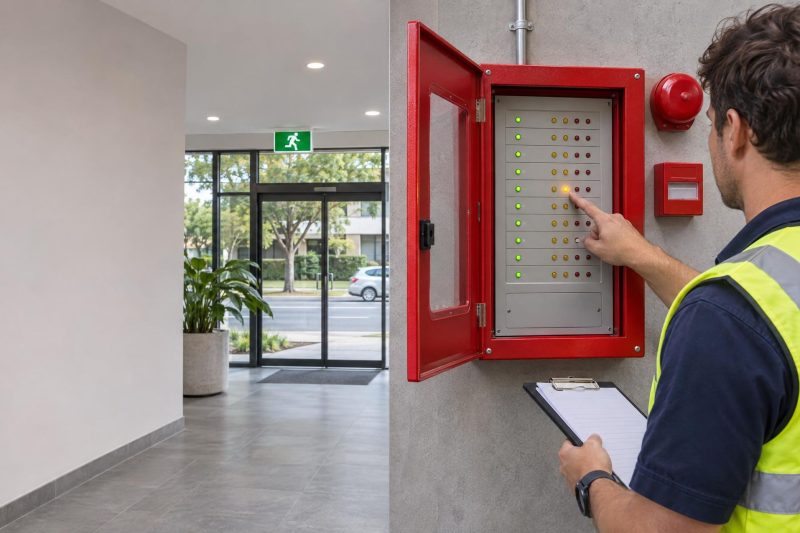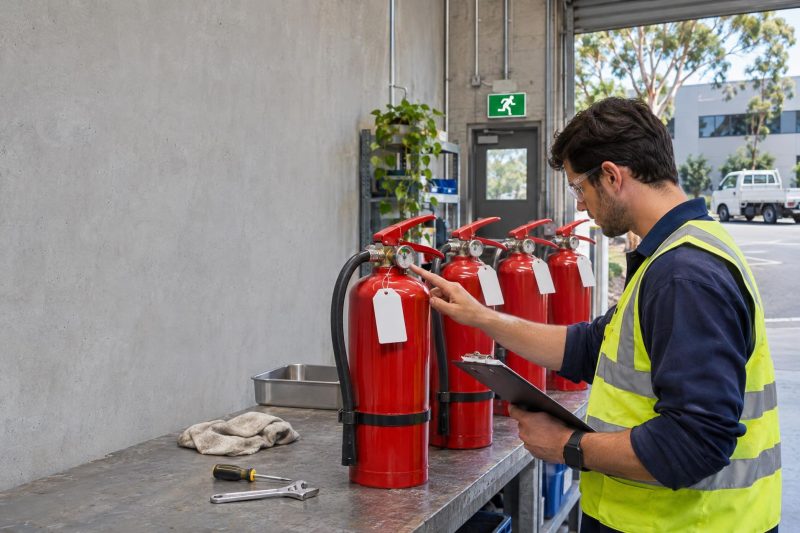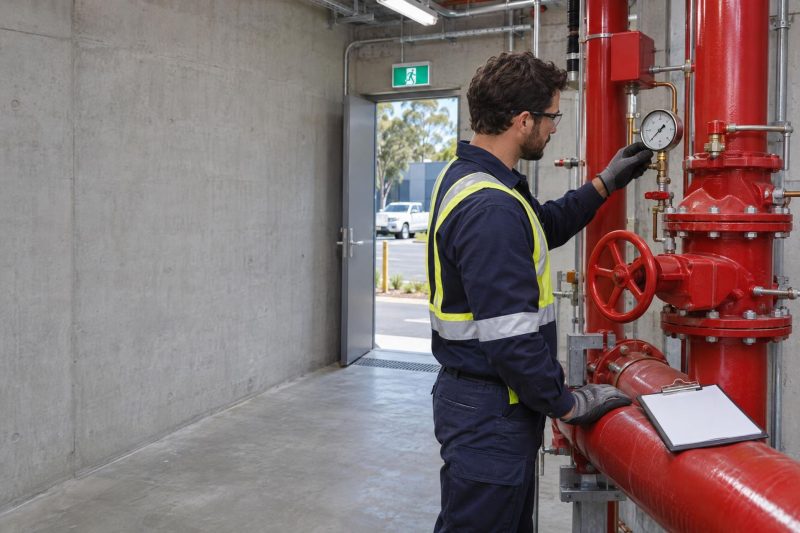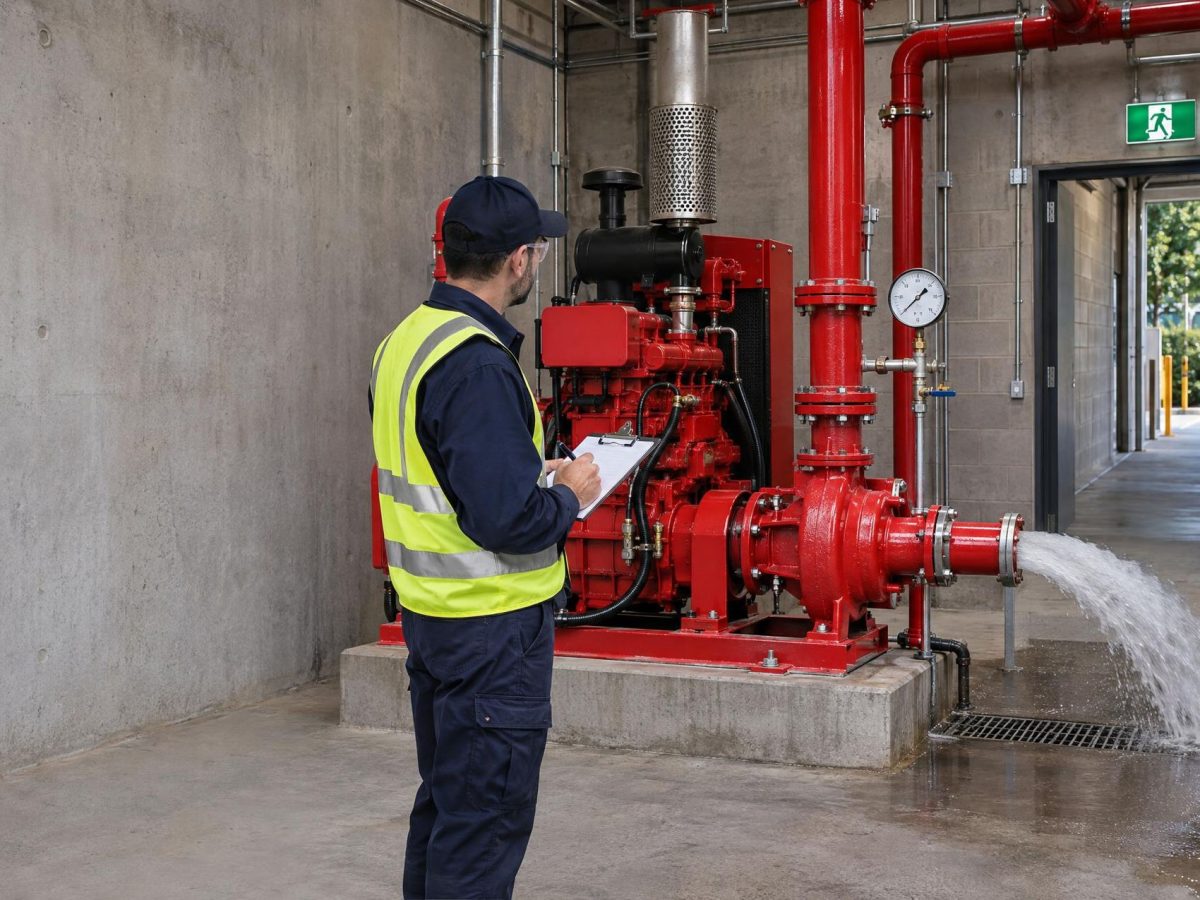
A hydrant system is the part of a building’s fire protection the occupants never use. It exists for the fire brigade, which means its condition is judged by firefighters rather than by an owner walking past.
That makes it easy to neglect and easy to fake. A hydrant outlet with the cap on looks identical whether the valve behind it turns or not.
What does a hydrant system do that a hose reel cannot?
The two are frequently confused and they solve different problems.
A hose reel is first-attack equipment. It is for a trained occupant dealing with a small fire in its early stage, running off the domestic or fire service supply.
A hydrant system delivers volume and pressure for firefighters. It has larger outlets, a dedicated main, and a pump set maintaining pressure behind it. It is what gets used when the fire is beyond first attack.
Buildings usually need both, and both appear as separate measures on the schedule. Hose reels are covered under fire hose reels.
What are the pump types?
Three, and each has a job.
Electric pump. Driven by mains power and the primary supply in most buildings. Its weakness is that a fire can take out the power feeding it, which is why a backup is usually required.
Diesel pump. Independent of mains power, and the reason it exists is the failure mode above. Diesel pumps need fuel, battery condition and cooling to be right, and those checks are where most diesel findings sit.
Jockey pump. A small pump maintaining system pressure under normal conditions. It is not a fire pump and cannot fight a fire. It stops the main pump starting on minor pressure loss, and a failed jockey pump is one of the most common findings on a site, because it fails quietly and the building never notices.
There may also be a boost or feed arrangement for brigade appliances, and those connections are part of what gets checked. The equipment is on the hydrants and pump sets page.
Why can a pump pass on pressure and fail on flow?
Because pressure at rest and flow under demand are different measurements.
A pump can be running, showing correct pressure on the gauge, and still deliver a fraction of its rated flow because of a partly closed valve, a blocked impeller, a failing coupling or an obstruction in the main. At rest the gauge reads fine, so the panel looks normal and the building believes it is protected.
Only a flow test exposes that. It is why flow testing is not optional, and why a report recording only pressure is not a complete record of the pump’s condition.
What are the common failures?
Five, and they recur across most sites.
Boosters blocked or seized. The inlet a fire truck connects to is often at the boundary, unused for years, never exercised. A seized or obstructed booster means the brigade cannot feed the system.
Jockey pump failure. Silent, and only discovered when the main pump starts cycling on minor pressure drops.
Seized valves. A valve not turned in years may not turn when needed. Where it sits between supply and hydrants, that is serious.
Fuel and battery condition on diesel pumps. Contamination, low charge or cooling neglect. Diesel pumps sit idle for years and then must start on demand.
Block plan and signage problems. The system may be perfect and unusable because nobody can identify which booster, valve or hydrant serves what.
What does a compliant record look like?
Itemised, per pump and per outlet, with results rather than ticks. Pressure and flow recorded separately. Valve operation confirmed, not assumed. Boosters checked with caps off. Block plan present and matching the site.
That level of record is what an insurer asks for after an incident, and it is the difference between answering a question and hoping nobody asks. The scheduling sits in the equipment testing frequencies table, and the standard is explained in AS1851-2012 explained.
Industrial sites carry the largest burden here, because travel distances and stored goods make the hydrant system the primary defence. Our warehouse and industrial fire protection article covers that context.
Frequently asked questions
How often should a fire pump be tested?
Weekly or monthly running checks for most installations, with fuller testing annually. The interval depends on pump type and system, and is set by the standard.
What is the difference between a hydrant and a hose reel?
A hose reel is first-attack equipment for a trained occupant. A hydrant system delivers volume and pressure for firefighters, with a dedicated main and pump set behind it.
Why does a fire pump need a flow test rather than just a pressure check?
Because a pump can hold pressure at rest while delivering very little. Restrictions, a failing impeller or a partly closed valve only appear under flow.
What is a jockey pump for?
Maintaining system pressure in normal conditions so the main pump does not start on small pressure losses. It cannot fight a fire, and its failure often goes unnoticed.
What is a booster and why does it matter?
The inlet firefighters connect to in order to supply the system. A blocked, seized or unmarked booster means the brigade cannot feed the hydrants.
Do hydrants need to be on the fire safety schedule?
Usually yes, as an essential fire safety measure. What appears depends on the building, and the schedule is the authoritative list.
How often do hydrants need to be tested?
They are on a defined cycle in the standard, with outlets exercised as part of it. The table is on the frequencies page.
What happens if a hydrant fails?
It is recorded as a finding with the required rectification. A failed hydrant or pump is significant, so it needs resolving before the annual statement rather than disclosed on it.

Written by FireSafe AU. Australian family owned since 2010 and a Silver Member of the Fire Protection Association of Australia. Testing, inspection and maintenance to AS1851-2012 across Sydney.