Most building owners with fire sprinkler systems in Sydney can describe them in three words. “It is up there.
That is usually the extent of it. Which is fine, right up until the AFSS inspection, when the questions get specific and the sprinkler system is the measure most likely to be flagged on an older building.
What fire sprinkler systems in Sydney actually do
A fire sprinkler system is a network of pipes under water pressure, connected to sprinkler heads throughout the building. Each head has a heat-sensitive element (a glass bulb filled with liquid that bursts, or a soldered link that melts) set to activate at a specific temperature, typically around 68°C.
When a fire heats the air near a head to that temperature, that head activates. Water discharges over the area directly below it. Other heads stay closed unless the fire reaches them too.
Three things worth knowing:
- Only the heads near the fire activate, not the whole system. This is the opposite of what Hollywood shows. A sprinkler system is not one big alarm trigger.
- Water begins flowing within seconds of activation, which is usually before anyone has called Fire and Rescue NSW.
- In most commercial buildings the system is tied to a monitoring service that automatically calls the fire brigade when water starts flowing.
Which Sydney buildings need sprinkler systems
Whether your building needs fire sprinkler systems in Sydney is determined by the National Construction Code based on building class, size, use, and occupancy. Rather than listing every threshold, the practical reality:
- High-rise residential and commercial buildings above a certain height almost always need them
- Large shopping centres, theatres, convention centres and assembly buildings usually require them
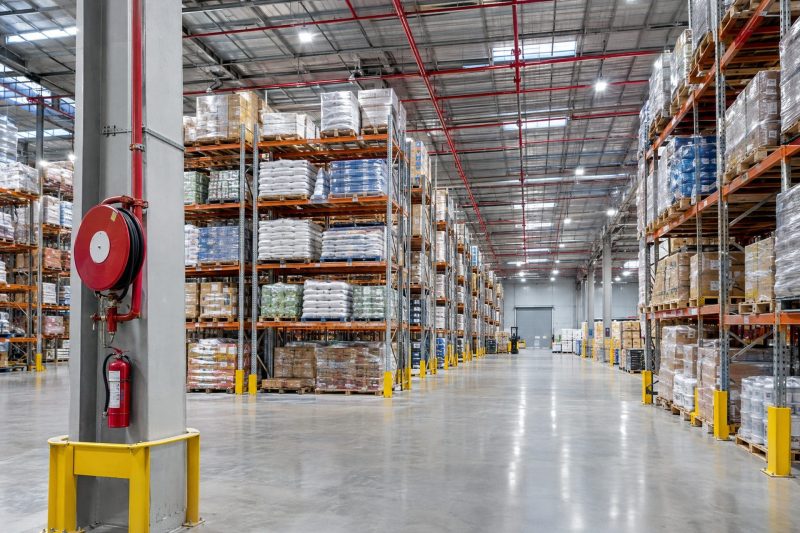
- Industrial buildings with high-volume or hazardous storage usually require them
- Hospitals, aged care, and larger childcare facilities typically require sprinklers for occupant safety reasons
- Warehouses above a certain floor area, or storing certain goods, usually require them
If you are not sure whether your building needs sprinklers, the answer is on your Fire Safety Schedule. Either the Schedule lists them or it does not. If your building has sprinklers installed but no entry on the Schedule for them, that is a problem to raise before any inspection.
The three main types in Sydney buildings
Wet pipe systems — the most common. Pipes are always full of water. Fastest activation, suitable for heated buildings.
Dry pipe systems — pipes are filled with compressed air. Water only enters when a sprinkler head activates and air pressure drops. Used in car parks, loading docks, and cold storage.
Pre-action systems — require TWO triggers before water discharges: a smoke or heat detector AND a sprinkler head activating. Used in environments where accidental discharge would be catastrophic. Data centres, server rooms, museums, archives.
If your building has sprinklers, know which type. The testing regime and the fault patterns differ.
What AS 2118 and AS 1851-2012 testing involves
Sprinkler systems are designed and installed under AS 2118. Once installed, they are tested and maintained under AS 1851-2012. The testing cycle has multiple frequencies:
- Weekly — basic checks of valves, gauges, and alarm devices
- Monthly — more thorough inspection of pressure, physical condition, and local alarm functions
- Six-monthly — functional testing of alarm signals, flushing, additional inspection
- Annual — comprehensive inspection, functional testing, documentation review
- Five-yearly — more invasive testing including internal pipe inspection and water flow tests
Nobody expects a building owner to do this testing themselves. What is expected is that it gets done by a qualified contractor, and that the records go into the AS 1851-2012 logbook for the building.
If your sprinkler system has not been through a full AS 2118 and AS 1851 inspection in the last twelve months, that is where your next AFSS will start.
Common sprinkler defects we find
The failure patterns are predictable:
- Painted-over sprinkler heads. A renovation went through, the ceiling got repainted, nobody masked the sprinkler heads. Paint on a sprinkler head affects activation temperature and discharge pattern.
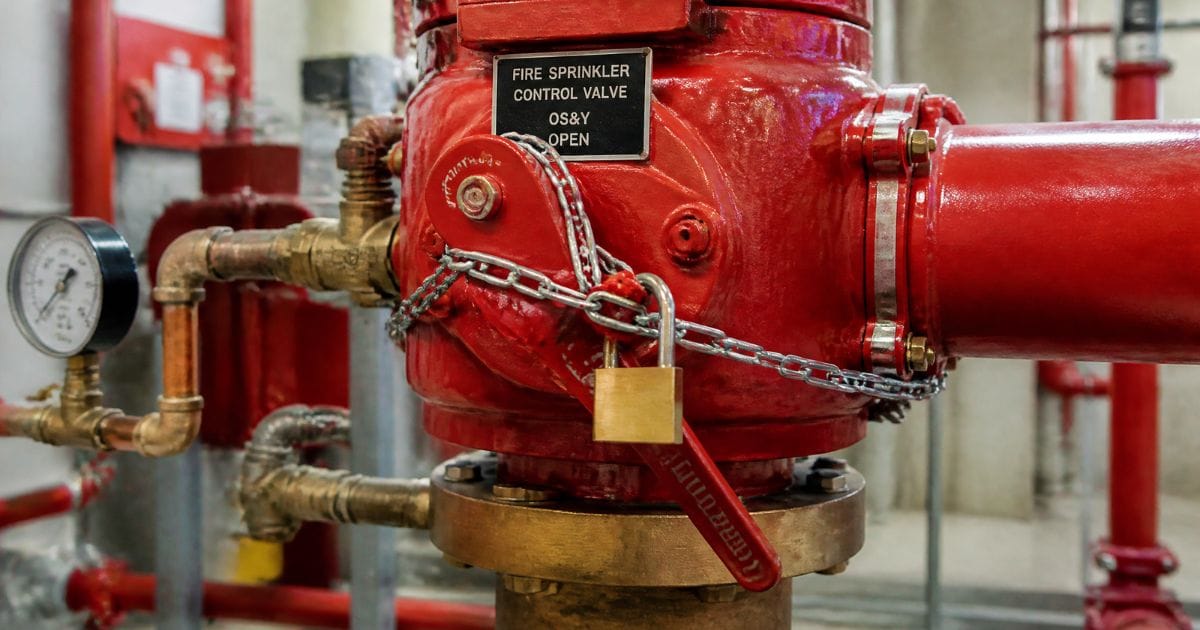
- Obstructed water supply valves. The main stop valve got covered by stock, a workbench, or a fit-out. If the valve cannot be reached in an emergency, the system cannot be isolated during works or restored afterwards.
- Pressure gauge faults. Gauges reading outside acceptable range are a common defect that owners never notice because nobody looks at them.
- Corrosion in older pipes. Systems installed 30-plus years ago will have internal corrosion unless they have been maintained. The five-yearly internal pipe inspection catches this.
- Sprinkler heads obstructed by stock. In warehouses and some industrial buildings, pallets or racking get stacked too close to sprinkler heads, blocking the discharge pattern.
- No current monitoring agreement. The sprinkler alarm signals to a central monitoring service. Expired or disconnected monitoring means the fire brigade is not being called when water starts flowing.
- Painted-over flow switches. Flow switches trigger the alarm when water moves through the system. Painted or covered switches are a surprisingly common finding.
What we see go wrong
On a recent inspection at an industrial warehouse in Smithfield, we found one of the sprinkler valves on the outlet side of the system had been closed. The system was still charged with water, so at first glance it looked live. But the moment the sprinklers activated and used the initial charge, no more water would reach the heads. The fire would get the first few seconds of discharge and then nothing.
We restored the system to performance standard on the day, then fitted chains and 003 locks to the valves so they cannot be accidentally closed again. That is the kind of defect nobody spots unless somebody who knows what they are looking at walks the whole system.
Sprinkler maintenance across your whole Fire Safety Schedule
Most building owners end up with three or four fire safety contractors. One for sprinklers, another for the fire alarm panel, another for extinguishers, another for the fire doors. Each one sends their own report.
When AFSS time comes around, chasing all four providers to get the paperwork in is a job in itself.
FireSafe works across every measure on your Fire Safety Schedule from one team, APFS-credentialed, 16 years in Sydney commercial buildings. One contact, one report, one AFSS.
Send us your Fire Safety Schedule and we will tell you what the sprinkler system (and everything else) actually needs.
Call 1300 347 372 or request a sprinkler system inspection.
Related reading: Fire Sprinkler Systems · Fire Safety Inspections Sydney · Annual Fire Safety Statements
Disclaimer: This article is intended for general informational purposes only. It does not constitute legal advice. Building owners, strata committees, and property managers should seek independent professional advice regarding their specific compliance obligations under the Environmental Planning and Assessment Regulation 2021, AS 1851-2012, the National Construction Code, and any applicable Australian Standards. Sprinkler system requirements vary depending on building class, size, occupancy, hazard classification, and the specific design of the system installed.

Written by FireSafe AU. Australian family owned since 2010 and a Silver Member of the Fire Protection Association of Australia. Testing, inspection and maintenance to AS1851-2012 across Sydney.