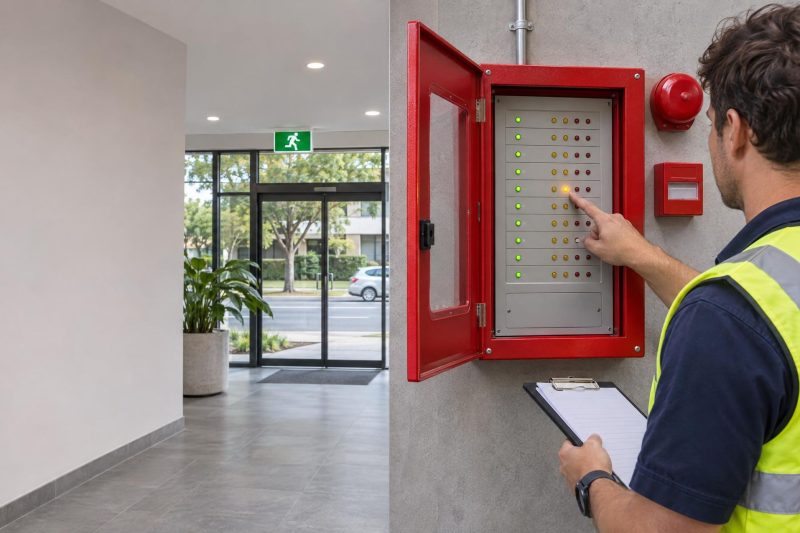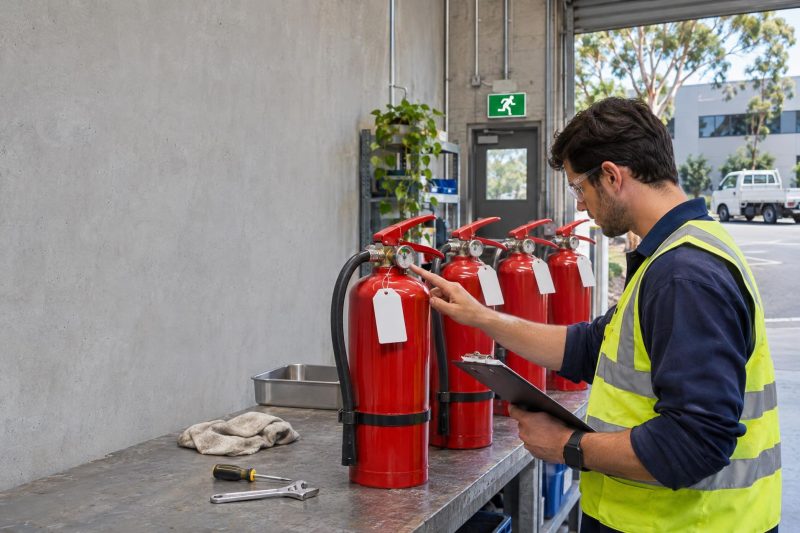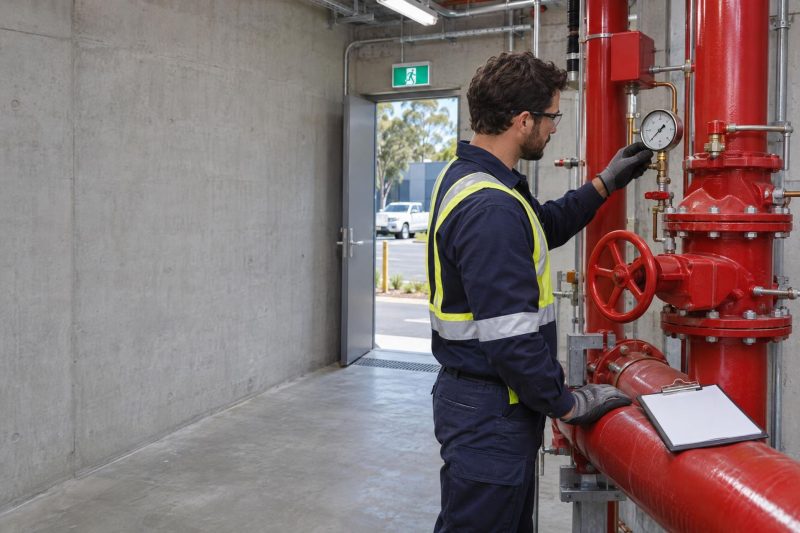
When building managers in Sydney think about fire safety equipment, they think about systems they can see: extinguishers, hose reels, sprinkler heads, exit signs. Fire dampers are inside the ductwork in the ceiling void. You cannot see them from any occupied space in the building, and because they sit behind access panels in sheet metal ductwork, they are out of sight and out of mind. That invisibility is exactly why fire damper inspection is one of the most frequently deferred maintenance obligations in Sydney commercial buildings, and why non-compliant dampers are a recurring finding in building audits.
A fire damper that fails to close during a fire allows flame and hot gases to travel through the building’s HVAC ductwork from the compartment of origin into adjacent compartments. In a building where passive fire protection elements and the sprinkler system are functioning correctly, a single non-closing fire damper can negate the compartmentation that every other system depends on.
In this guide, FireSafe AU explains what fire dampers are, where the NCC requires them, how they differ from smoke dampers, and what AS1851 requires for inspection and testing. For a full overview of your building’s essential fire safety measure obligations, see our fire safety inspections guide.
What is a fire damper and what does it do?
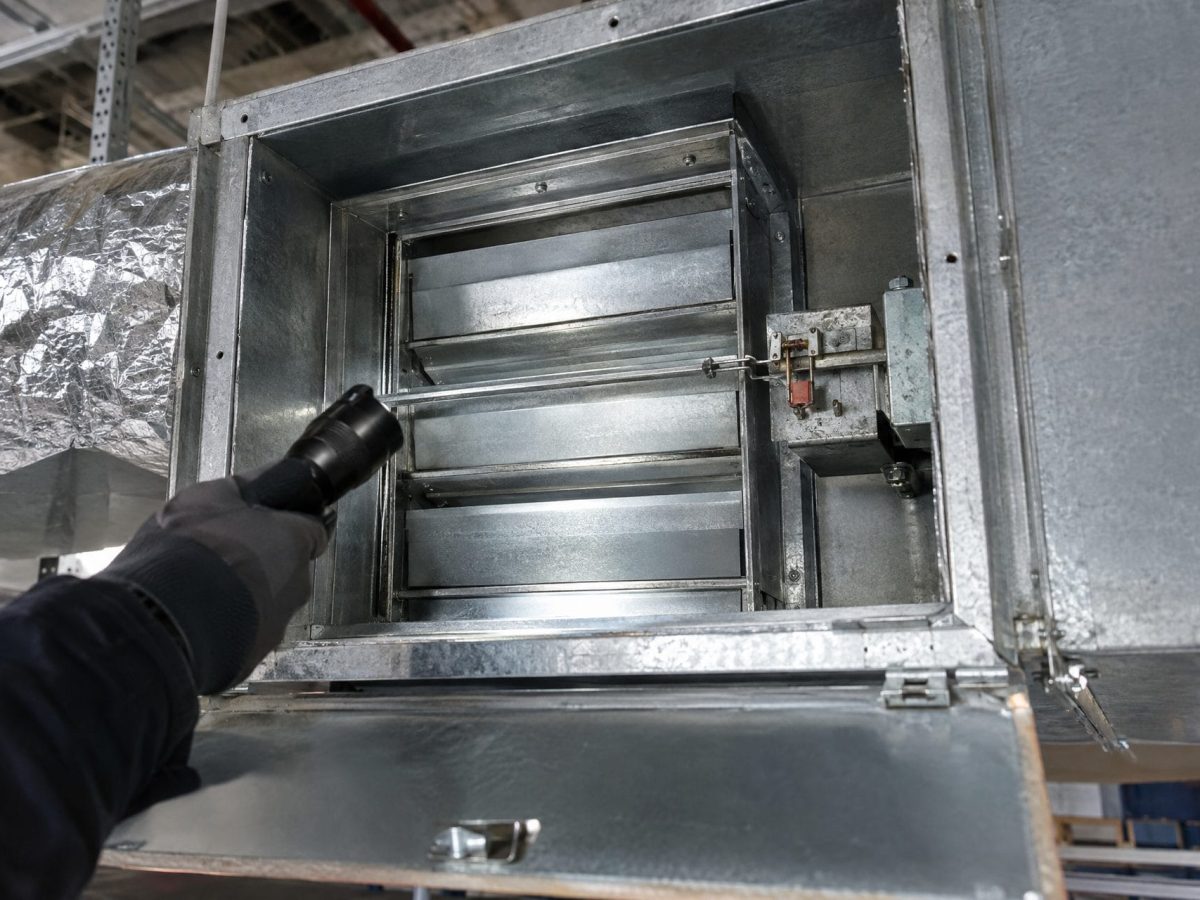
A fire damper is a passive fire protection device installed inside an HVAC duct at the point where the duct passes through a fire-rated wall or floor assembly. Its function is to close automatically when fire conditions are detected, sealing the duct penetration and preventing flame and hot gases from using the ductwork as a pathway between fire compartments.
Most fire dampers in Australian buildings are fusible-link actuated. The damper blade is held open by a fusible link rated to melt at a set temperature, typically 72 degrees Celsius. When the temperature in the duct reaches that threshold, the link melts and the blade closes under spring tension. The blade is rated to resist fire for a defined period, matching the fire resistance level of the wall or floor assembly it protects.
Electrically actuated fire dampers are common in newer buildings and in installations integrated with the building management system. These close on a signal from the fire alarm panel rather than on temperature alone, which means they can be triggered before the duct temperature reaches the fusible link threshold. This interaction between the fire alarm system and the damper is one reason maintaining your fire alarm panel is directly connected to your damper compliance.
What is the difference between a fire damper and a smoke damper?
These two components are consistently confused in building management circles but serve different functions and are governed by different standards:
| Feature | Fire Damper | Smoke Damper |
|---|---|---|
| Primary function | Stops flame and hot gas | Controls smoke movement |
| Activation trigger | Fusible link (heat) or electrical on alarm | Electrical on smoke signal or alarm |
| Location | Duct penetrations through fire-rated walls and floors | Air handling systems and smoke control zones |
| Governing standard | AS1682.1 and NCC | AS1668.1 |
| Testing method | Physical blade activation test | Operational test via BMS or fire alarm panel |
Some installations use combination fire and smoke dampers that perform both functions simultaneously. These are common in buildings where ductwork passes through both a fire-rated element and a smoke control zone at the same penetration point.
Where does the NCC require fire dampers?
The NCC requires fire dampers wherever an HVAC duct penetrates a fire-rated wall or floor assembly, subject to specific exemptions for certain duct materials and diameters. In practical terms, most commercial, industrial, and institutional buildings with centralised HVAC systems have fire dampers at every point where ductwork crosses a fire compartment boundary.
Common locations in a Sydney commercial building include:
- Ductwork passing through fire-rated corridor walls into tenancy spaces on each floor
- Supply and return air ducts crossing floor assemblies between levels in multi-storey buildings
- Ductwork penetrating fire-rated mechanical shaft walls
- Air handling unit connections to fire-rated plant room enclosures
Exemptions exist for small-diameter metal ducts that can maintain the fire resistance level without a damper, based on duct material, wall thickness, and the FRL required. These exemptions are established at the design and certification stage and cannot be assumed during maintenance.
How often do fire dampers need to be inspected under AS1851?
Under AS1851, fire dampers are listed essential fire safety measures and must be inspected and tested at the intervals the standard prescribes. For most fire dampers, the requirement is an annual inspection and activation test.
Each inspection involves:
Access: The damper is accessed through a dedicated access panel in the ductwork. If no access panel exists, one must be installed before testing can proceed. This is a routine finding in older Sydney buildings where dampers were installed without adequate access provision in the original construction.
Visual inspection: The damper blade, frame, fusible link, and actuator mechanism are assessed for corrosion, physical damage, grease accumulation, and correct positioning.
Activation test: The fusible link is manually released, or the electric actuator triggered, to confirm the blade closes fully. A blade that reaches 90 percent closed but does not fully seat is a defective damper. Partial closure is not compliant.
Reset and recommission: The damper is reset to its open operating position. If the fusible link was consumed during the test, it is replaced with a new link of the correct rating. Electrically actuated dampers are confirmed to reset correctly from the BMS.
Written report: Each damper’s location, condition, activation test result, and any defects are recorded. This report supports the Annual Fire Safety Statement and forms the building’s damper maintenance register.
A building that has not had its fire dampers tested within the required interval cannot certify that essential fire safety measure as compliant, which directly affects AFSS lodgement. For a full picture of which measures appear on a typical fire safety schedule, see our products and services page.
Why do fire dampers fail in Sydney buildings?
- Grease accumulation. In buildings where ductwork runs near kitchen exhaust systems or commercial cooking areas, grease builds up on damper blades and fusible links over time. A link coated in hardened grease may not melt at the correct temperature. A blade coated in grease may not close fully or may stick in the open position during an activation test.
- Corrosion. Dampers in humid environments including roof voids, basement plant rooms, and buildings near the coast are susceptible to corrosion that seizes the blade pivot mechanism. A corroded damper can appear intact visually but will not move when the activation mechanism triggers.
- No access provision. The damper physically exists but there is no access panel in the duct to reach it for inspection. This is both a maintenance failure and a compliance failure: the building cannot certify the measure without access to test it.
- Post-installation ductwork modifications. When HVAC systems are reconfigured during fit-out works, dampers are sometimes removed, bypassed, or left in inaccessible positions. Without a damper register cross-referenced to as-built drawings, these changes go undocumented and undetected until an audit.
- Fusible link not replaced after a previous test. If a prior inspection consumed the fusible link and a replacement was not installed, the damper has no activation mechanism. It will sit open and will not close during a fire regardless of its physical condition.
FireSafe AU carries out fire damper inspections across Sydney as part of a full essential fire safety measures programme. Contact our team to arrange testing for your building.
Book Your Fire Damper Inspection With FireSafe AU
FireSafe AU provides fire damper inspection and testing services across Sydney for commercial, industrial, healthcare, and institutional buildings. Our technicians locate, access, test, and report on every fire damper in your building against the AS1851 requirements, producing the written documentation your Annual Fire Safety Statement depends on.
Where dampers are inaccessible, corroded, or defective, we provide rectification including access panel installation, blade replacement, link replacement, and actuator servicing. To see our full range of fire protection maintenance services, visit our products and services page or contact FireSafe AU today.
Frequently Asked Questions: Fire Damper Inspection Sydney
How often do fire dampers need to be inspected in NSW?
Under AS1851, fire dampers must be inspected and activation-tested annually as part of the essential fire safety measures programme. The inspection result is recorded in the maintenance report and supports the Annual Fire Safety Statement lodgement.
What happens if a fire damper fails the activation test?
A damper that does not fully close is recorded as defective and must be rectified before the essential fire safety measure can be certified as compliant for the AFSS. Rectification options depend on the cause: blade replacement, new fusible link, actuator repair, or full damper replacement.
Do all HVAC systems require fire dampers?
Not all. Fire dampers are required specifically where HVAC ductwork penetrates a fire-rated wall or floor assembly. The building’s fire safety schedule and original certification documents confirm which dampers are listed as essential fire safety measures.
What is a fusible link and why does it need to be replaced?
A fusible link is the heat-activated trigger that holds the damper blade open during normal ventilation. When the duct temperature reaches the link’s rated threshold, the link melts and the blade closes. Fusible links are single-use devices. Once activated they must be replaced. They also degrade in high-temperature or corrosive environments and should be inspected at every annual service.
Why does my building need an access panel in the ductwork?
Every fire damper must have an access panel large enough for a technician to inspect and activate the damper mechanism. Without it, the damper cannot be tested, the essential fire safety measure cannot be certified, and the building is non-compliant for that measure.
Can fire damper maintenance be combined with HVAC servicing?
AS1851 compliance testing must be carried out by a competent fire safety practitioner, not a general HVAC maintenance technician. However, fire damper inspections can be scheduled to coincide with HVAC maintenance visits to minimise access disruption.

Written by FireSafe AU. Australian family owned since 2010 and a Silver Member of the Fire Protection Association of Australia. Testing, inspection and maintenance to AS1851-2012 across Sydney.