An aged care facility is not simply a Class 9a building that needs a compliant fire protection programme. It is a building where many residents cannot walk to the fire stairs unassisted, where evacuation takes far longer than in any other building type, and where the fire strategy must account for residents who may be cognitively impaired, physically dependent, or asleep when an alarm activates. The fire safety obligations for aged care facilities in NSW reflect this reality and go materially beyond what a standard commercial building must have.
For facility managers and compliance officers in the aged care sector, fire safety intersects with three distinct frameworks: building certification obligations under the NCC, maintenance obligations under AS1851, and accreditation evidence requirements under the Aged Care Quality Standards. Getting all three aligned and documented is the ongoing compliance challenge.
In this guide, FireSafe AU explains what the NCC requires for Class 9a buildings, what AS1851 maintenance looks like in an aged care context, what specific obligations exist for non-ambulant residents, and what evidence the Aged Care Quality and Safety Commission expects to see. For a broader overview of fire safety maintenance obligations across all building types, see our fire safety inspections guide.
Why are fire safety requirements different for aged care facilities?
Class 9a buildings, which include hospitals and residential aged care facilities, face more demanding NCC fire safety requirements than most other building classes because of the occupant risk profile. In an office building, a retail shop, or a commercial warehouse, the fire strategy assumes occupants can evacuate unaided, can hear and respond to an alarm, and can use the fire stairs without physical assistance.
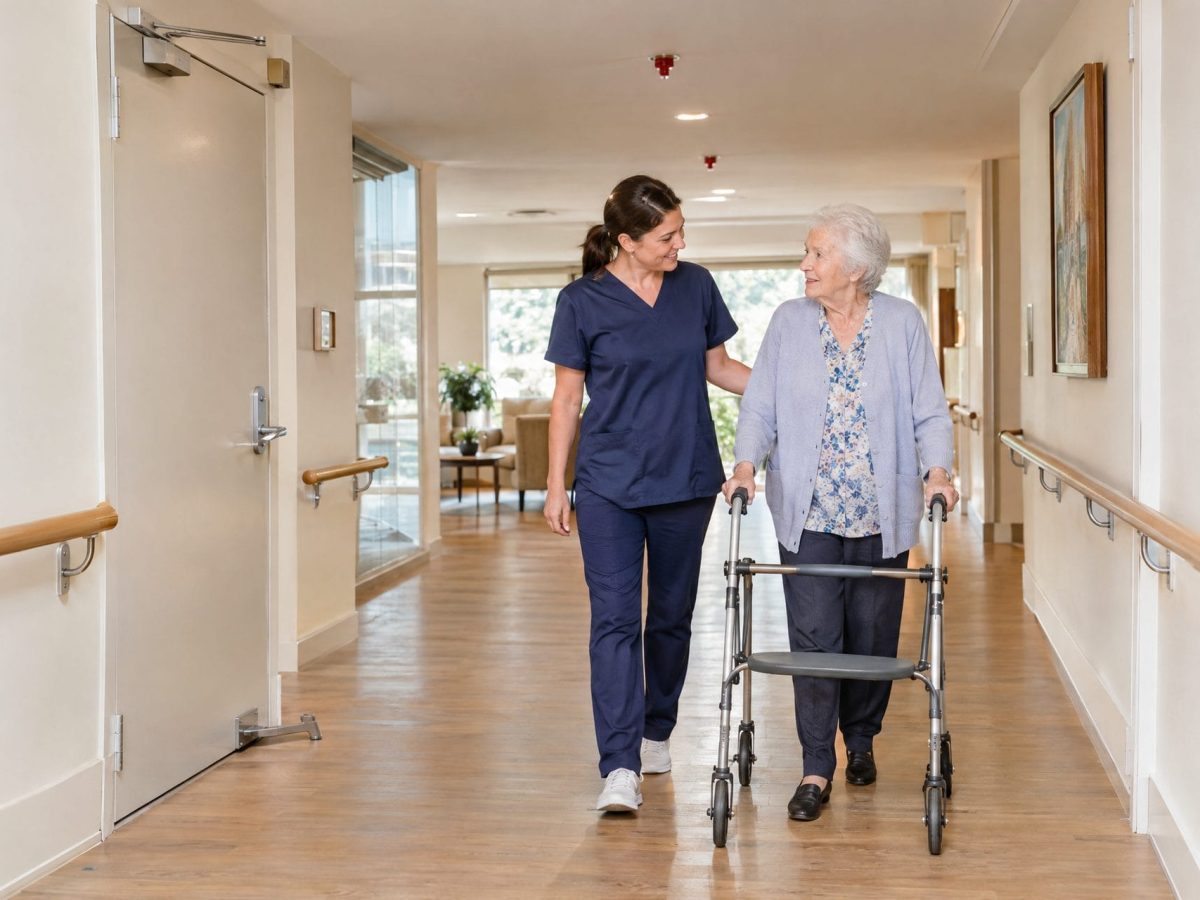
In an aged care facility, none of these assumptions hold across the resident population. A significant proportion of residents cannot walk unassisted. Residents may be asleep and harder to rouse. Residents with dementia or other cognitive impairment may not respond appropriately to an alarm. Residents connected to medical equipment cannot be moved rapidly without planning and clinical oversight.
The NCC addresses this through fire strategies that do not rely on rapid self-evacuation. The predominant approach in Australian aged care facilities is progressive horizontal evacuation combined with a defend-in-place strategy. Progressive horizontal evacuation means moving residents into an adjacent fire compartment on the same floor level rather than down the stairs to exit the building. Defend-in-place means residents remain within the protected compartment structure of the building while the fire is managed, rather than being evacuated externally. The fire-rated compartment walls and self-closing fire doors that make this strategy viable are NCC requirements, not optional design choices.
What does the NCC require for Class 9a aged care buildings?
Automatic sprinkler systems. Sprinkler systems are required in all Class 9a buildings regardless of height or floor area. The sprinkler system in an aged care facility is a core component of the defend-in-place strategy: it suppresses or controls a fire within a compartment while residents are relocated horizontally and staff manage the emergency. For detail on sprinkler types and maintenance obligations, see our fire sprinkler installation guide.
Fire compartmentation. Class 9a buildings must be divided into fire compartments of specified maximum area. Each compartment is separated from adjacent compartments by fire-rated walls and self-closing fire doors. The compartment size determines how many residents must be relocated horizontally and how much time is available before the fire threatens the adjacent protected space.
Smoke detection. Early detection is critical in a building where evacuation response is slow. Class 9a buildings require smoke detection throughout the building, integrated with the fire alarm system and, where building height and size require it, an EWIS system for voice instruction capability.
Fire doors. Self-closing fire doors between compartments are essential to the horizontal evacuation strategy. A fire door held open in a compartment boundary corridor invalidates the entire strategy for that boundary. Fire doors in aged care buildings must not be wedged or propped open under any circumstances.
Emergency lighting and exit signs. Clear illuminated egress paths are particularly important in an aged care environment where some residents may have impaired vision or orientation. For detail on testing obligations, see our emergency lighting testing guide.
What does AS1851 maintenance look like for an aged care facility?
The AS1851 maintenance programme for an aged care facility covers all essential fire safety measures at their required intervals. For a typical facility this includes:
- Automatic sprinkler system: monthly, quarterly, and annual inspections and tests
- Fire detection and alarm system: monthly, quarterly, and annual inspections and tests
- Emergency lighting and exit signs: six-monthly and annual inspections and tests
- Fire hose reels and hydrant system: quarterly and annual inspections
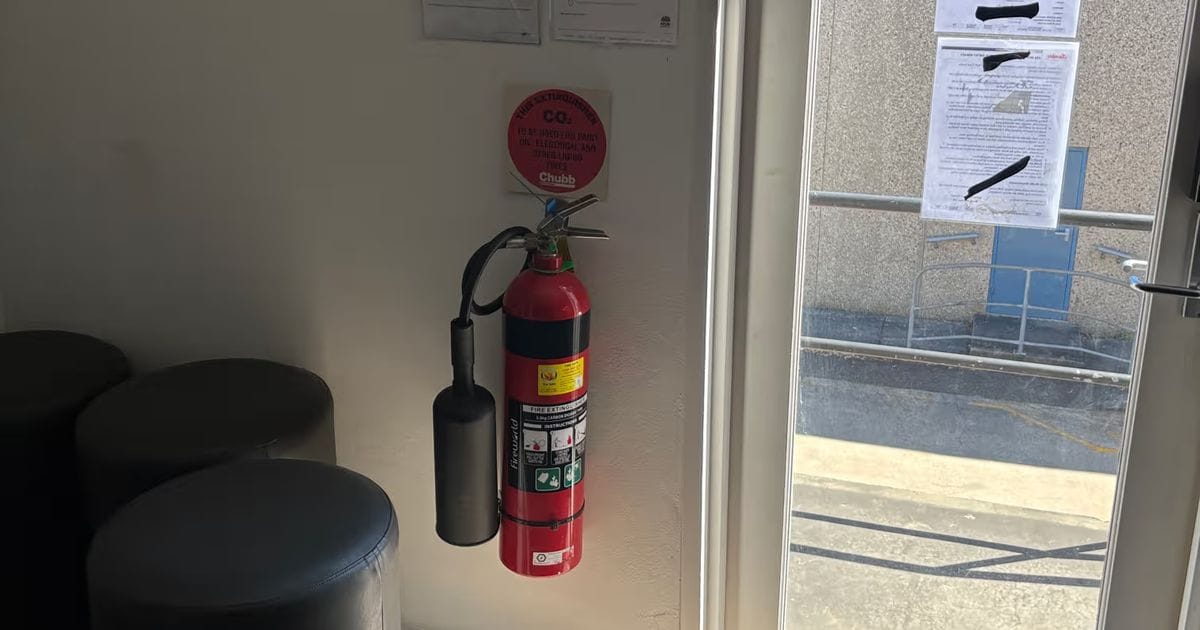
- Portable fire extinguishers: six-monthly and annual inspections
- Fire doors: annual inspection and activation test
- EWIS where installed: monthly, six-monthly, and annual inspections
For Class 9a buildings the consequences of a system failure during an emergency are more severe than in most other building types, because residents cannot self-evacuate in response. Maintenance records must be retained and must support both the Annual Fire Safety Statement lodgement and the Aged Care Quality and Safety Commission accreditation review.
What are the fire safety obligations specific to non-ambulant residents?
Personal Emergency Evacuation Plans. Each non-ambulant resident must have a documented personal evacuation plan identifying their mobility limitations, the equipment required to relocate them, which staff members are responsible for their evacuation on each shift pattern, and which adjacent compartment they will be relocated to.
Evacuation equipment. The facility must maintain the physical equipment required to move
non-ambulant residents: evacuation wheelchairs, evacuation mattresses, or evacuation sleds, depending on each resident’s specific physical needs and the compartment layout. Equipment must be accessible and maintained in serviceable condition.
Staff training on non-ambulant procedures. Every staff member who may be on duty during an emergency must know which residents in their care zone are non-ambulant, where their evacuation equipment is located, and which direction they move toward in a horizontal evacuation. General fire safety awareness is not sufficient: fire warden training in an aged care context must address the specific non-ambulant evacuation procedures for that facility.
Drill coverage across all shift patterns. A single annual drill during business hours does not expose night shift staff to the evacuation procedure. Drills must be structured to cover all shift patterns over time.
What fire safety evidence does the Aged Care Quality and Safety Commission expect?
Standard 8 of the Aged Care Quality Standards requires that the environment in which care is delivered is safe and suitable for residents. Surveyors conducting accreditation assessments look specifically for:
- The current Annual Fire Safety Statement and evidence of lodgement with Council
- Maintenance records for all essential fire safety measures for the current and prior year
- Personal Emergency Evacuation Plans for all non-ambulant residents, current and individually named
- Staff training records for fire safety and evacuation procedures across all shift patterns
- Fire drill records including date, scenario, number of staff involved, time achieved, and issues identified
- Evidence that defects identified in maintenance reports have been rectified within appropriate timeframes
Facilities that cannot produce this documentation are at risk of a non-compliance finding against Standard 8. Contact FireSafe AU to discuss a maintenance programme structured around both AS1851 and the accreditation evidence framework.
Book Your Aged Care Fire Safety Assessment With FireSafe AU
FireSafe AU provides essential fire safety measure maintenance programmes designed for the specific requirements of Class 9a aged care buildings. Our maintenance schedules are structured to support AFSS lodgement and to produce the maintenance record documentation that accreditation assessments require.
We work with facility managers, compliance officers, and quality teams to ensure fire safety documentation aligns with the Aged Care Quality Standards evidence framework. View our full range of fire protection services or contact FireSafe AU today to arrange your assessment.
Frequently Asked Questions: Fire Safety in Aged Care Facilities NSW
What is progressive horizontal evacuation and why is it used in aged care facilities?
Progressive horizontal evacuation moves residents into an adjacent fire compartment on the same floor level rather than evacuating them externally from the building. It is used in aged care facilities because many residents cannot use stairs. The fire-rated compartment walls and self-closing fire doors separating compartments are what make this strategy viable.
Are automatic sprinklers required in all aged care facilities?
Yes. The NCC requires automatic fire sprinkler systems in all Class 9a buildings, including residential aged care facilities, regardless of building height or floor area.
How often must fire drills be conducted in aged care facilities?
AS3745 requires drills at intervals sufficient to ensure all staff who may be on duty are familiar with the evacuation procedure. For facilities with multiple shift patterns this means drills must cover day, afternoon, and night shift scenarios over time.
What happens if an aged care facility’s maintenance records are incomplete at accreditation?
Incomplete maintenance records typically result in a non-compliance finding against Standard 8 of the Aged Care Quality Standards. They also affect AFSS lodgement, as maintenance records are required to certify each essential fire safety measure.
Does the Aged Care Act 1997 contain specific fire safety technical requirements?
The Act and the Quality Standards impose safety obligations that encompass fire safety, but the specific technical requirements for fire protection systems are set by the NCC and Australian Standards. Both frameworks apply simultaneously.

Written by FireSafe AU. Australian family owned since 2010 and a Silver Member of the Fire Protection Association of Australia. Testing, inspection and maintenance to AS1851-2012 across Sydney.