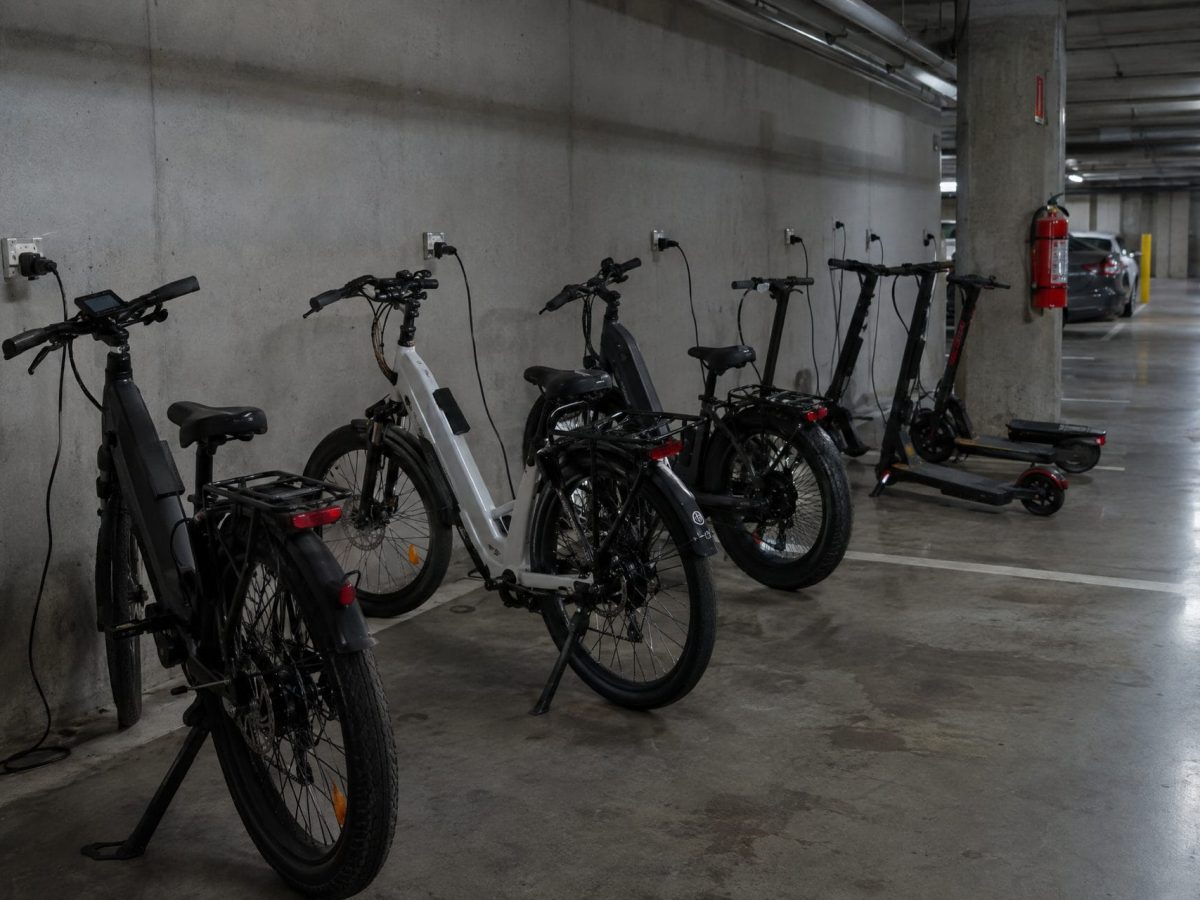
E-bike and e-scooter fires are among the fastest-growing causes of residential building fires in Australia. Fire and Rescue NSW has responded to a significant increase in lithium battery fire incidents in Sydney apartment buildings over the past two years, and the pattern is consistent: a lithium ion battery in an e-bike or e-scooter experiences thermal runaway during or after charging, and the fire that follows is intense, fast-moving, and produces toxic gases that incapacitate occupants before the visible fire reaches them.
For strata managers and building owners in Sydney, this is not a future risk to monitor. It is a current risk that exists in your building right now if any occupant charges an e-bike or e-scooter in their unit, in a common area, or in the basement carpark. The question is not whether to address it but how to address it within the existing fire safety and strata management framework.
In this guide, FireSafe AU explains what makes lithium battery fires categorically different from other building fires, the current NSW regulatory position, what building managers can do right now, and the implications for existing building fire safety systems. For a broader overview of your building’s fire safety obligations, visit our products and services page or see our fire safety inspections guide.
Why are lithium battery fires so dangerous in residential buildings?
A lithium ion battery fire is different from a conventional building fire in three ways that matter directly for building managers:
Thermal runaway. A lithium ion cell that is overcharged, physically damaged, or defective can enter thermal runaway: a self-sustaining chemical reaction that generates heat faster than it can dissipate. Once thermal runaway begins in one cell, it propagates rapidly through adjacent cells in the battery pack. The process cannot be stopped by removing the power source because the reaction is internally driven.
Speed. Thermal runaway in an e-bike battery can progress from normal operating temperature to catastrophic fire in minutes with no visible warning. Unlike a smouldering fire that gives smoke detectors time to activate and occupants time to respond, a thermal runaway event can produce an intense fire almost instantaneously, before any occupant in the building has any indication of risk.
Toxic gas production. Burning lithium ion batteries produce hydrogen fluoride and other highly toxic gases as the electrolyte decomposes. These gases are acutely toxic at low concentrations. An occupant in a unit where an e-bike battery is burning can be incapacitated by toxic gas inhalation before the fire alarm system activates and before fire is visible outside the unit.
Suppression difficulty. Water cools lithium battery fires and limits spread to adjacent combustibles, but very large volumes sustained over an extended period are required for full suppression because the battery continues generating heat internally. Standard fire sprinkler systems are not designed to deliver the sustained water volume a lithium battery fire demands. The brigade typically manages these fires with extended water application well beyond what a standard sprinkler head delivers.
What is the current NSW regulatory position for e-bikes in strata buildings?
As of 2026, NSW does not have specific legislation directly prohibiting e-bike or e-scooter storage or charging in apartment buildings. Several existing legal frameworks do apply:
Strata Schemes Management Act 2015: Owners corporations have the power to make by-laws governing the use of common property and the conduct of occupants on that property. By-laws can prohibit or regulate e-bike and e-scooter charging in common areas, carparks, and balconies. A by-law cannot prohibit behaviour within a lot owner’s own lot, but it can restrict the use of common infrastructure for charging purposes.
Work Health and Safety Act 2011: Where the owners corporation or managing agent is considered a PCBU, there is an obligation to manage foreseeable risks to health and safety. A documented, known fire risk from lithium battery storage in the building is a risk that a PCBU is expected to manage actively and demonstrably.
Fire and Rescue NSW guidance: FRNSW has issued specific guidance recommending that lithium batteries be charged only in well-ventilated spaces away from means of egress, that batteries not be charged overnight unattended, and that damaged or visibly swelling batteries be removed from the building immediately.
What can strata managers and building owners do right now?
- Adopt a by-law regulating e-bike and e-scooter charging. A by-law can prohibit charging in common areas and carparks, require charging to occur only within individual lots, prohibit overnight unattended charging, and require that visibly damaged or swelling batteries be removed from the building within 24 hours. This does not eliminate the risk but contains it to occupied spaces where existing smoke alarms and detection systems are present.
- Issue a formal written communication to all occupants. A written notice describing the specific risk of thermal runaway, the FRNSW guidance on safe charging, and the building’s by-law position creates a documented record that the owners corporation took the risk seriously. It also gives individual occupants the information they need to make safer decisions.
- Review fire detection coverage in carparks and storage areas. Basement carparks are common e-bike storage and charging locations. Review whether the existing fire detection system is positioned to detect a battery fire near floor level in charging areas. Heat detectors in carparks are typically placed at high level, which may not provide rapid detection of a floor-level battery fire in a corner of the space.
- Assess the sprinkler coverage in charging zones. If the carpark has a sprinkler system, confirm that its activation zone coverage adequately protects areas where e-bikes are currently stored and charged. A battery fire in a location between sprinkler coverage zones is a specific risk worth assessing with a fire safety practitioner.
- Consider a dedicated e-bike charging station. A purpose-built charging station in a well-ventilated, fire-rated enclosure with appropriate detection and suppression provides a managed charging environment that significantly reduces risk to the broader building. Several Sydney strata buildings have installed purpose-built charging rooms with CO2 suppression and dedicated heat detection as a practical long-term management solution.
- Ensure warden training covers the correct battery fire response. The instinctive response of reaching for a hose reel or extinguisher is the wrong response for a lithium battery fire. Fire wardens in buildings with known e-bike charging must be trained to prioritise evacuation and brigade attendance over first-attack firefighting. Contact FireSafe AU to discuss updating your building’s warden training for this risk.
What type of fire extinguisher should be used on a lithium battery fire?
This is one of the most common questions building managers ask, and the honest answer is that no portable extinguisher will stop a lithium ion battery in full thermal runaway. The correct response is evacuation and immediate brigade attendance.
Water-based extinguishers can cool the exterior and slow spread to adjacent combustibles. They cannot stop the internal thermal reaction. CO2 extinguishers temporarily suppress visible flame but the fire reignites when the CO2 disperses. Dry powder extinguishers create significant contamination without addressing the battery reaction.
The practical implication for building managers is direct: the response procedure for a lithium battery fire is evacuate the area, activate the alarm, call 000, and do not attempt to fight the fire with a portable device.
FireSafe AU can assess your building’s fire safety arrangements in the context of lithium battery risks. Contact our team to discuss your building’s exposure.
Book a Lithium Battery Fire Risk Assessment With FireSafe AU
FireSafe AU provides fire safety assessments for strata buildings and commercial properties across Sydney, including specific review of fire detection and suppression coverage in the context of lithium battery storage and charging risks. Our assessments identify gaps in existing systems, review by-law and communication frameworks, and provide practical recommendations.
View our full range of fire safety services or contact FireSafe AU today to arrange your assessment.
Frequently Asked Questions: E-Bike and Lithium Battery Fire Risks in Sydney Buildings
Can a strata owners corporation ban e-bikes from the building?
An owners corporation can pass a by-law restricting or prohibiting e-bike and e-scooter storage and charging in common property areas including carparks and common corridors. It cannot prohibit items within a lot owner’s own lot. A by-law prohibiting charging in common areas and requiring charging to occur within individual lots is within the owners corporation’s powers under the Strata Schemes Management Act 2015.
Are sprinkler systems effective against lithium battery fires?
Sprinkler systems provide partial protection. They suppress visible fire and cool surrounding materials, which limits spread to adjacent combustibles and provides time for evacuation. Standard sprinkler heads are not designed to deliver the sustained volume required for full suppression of a lithium battery fire in thermal runaway.
What should occupants do if an e-bike battery starts to smoke or smell unusual during charging?
Stop charging immediately, leave the area, close doors behind you without locking them, activate the fire alarm, and call 000. Do not attempt to move a battery that is smoking, swelling, or producing a burning smell. Thermal runaway can progress very rapidly after these warning signs appear.
Can thermal runaway be detected before a fire starts?
Pre-thermal-runaway batteries may produce off-gassing detectable by specialist gas sensors. Standard smoke and heat detectors respond once visible smoke or significant heat is present. Specialist detection products for battery storage environments exist but are not yet standard in residential buildings.
Is overnight charging of e-bikes dangerous?
Overnight charging significantly increases risk because thermal runaway would occur when occupants are asleep and less alert to warning signs. Fire and Rescue NSW specifically recommends against leaving lithium batteries charging unattended overnight.

Written by FireSafe AU. Australian family owned since 2010 and a Silver Member of the Fire Protection Association of Australia. Testing, inspection and maintenance to AS1851-2012 across Sydney.